How to Identify Natural, Treated, and Synthetic Gemstones
The gemstone market has grown significantly over the past decade, offering buyers an incredible variety of colorful and valuable stones. Whether you’re shopping for a sapphire, ruby, emerald, aquamarine, tourmaline, garnet, or opal, you’ll likely come across terms such as natural, treated, synthetic, lab-grown, or even imitation gemstones.
For many first-time buyers, these terms can be confusing. Understanding the differences is essential because a gemstone’s origin and treatment have a major impact on its value, rarity, durability, and long-term investment potential.
In this comprehensive guide by Imperial Gemstone, we’ll explain how to identify natural, treated, and synthetic gemstones, discuss the most common gemstone treatments, and share practical tips for buying authentic gemstones with confidence.
Why It Matters
Knowing whether a gemstone is natural, treated, or synthetic helps you:
- Understand its true market value.
- Avoid overpaying.
- Make informed purchasing decisions.
- Choose the right gemstone for jewelry or collecting.
- Ensure transparency and ethical buying.
Professional sellers should always disclose treatments or laboratory origins, allowing buyers to make informed decisions.
What Is a Natural Gemstone?
A natural gemstone is a mineral that formed naturally within the Earth over millions of years through geological processes. These gemstones are mined from the earth and then cut and polished to reveal their beauty.
Natural gemstones typically contain small inclusions or growth features that formed during their creation. These characteristics are often considered evidence of authenticity rather than flaws.
Examples include:
- Natural Sapphire
- Natural Ruby
- Natural Emerald
- Natural Aquamarine
- Natural Tourmaline
- Natural Garnet
- Natural Quartz
- Natural Topaz
- Natural Opal
Natural gemstones are generally the most valuable because of their rarity and unique origin.
Characteristics of Natural Gemstones
Natural gemstones often display:
- Natural inclusions
- Growth lines
- Color zoning
- Mineral crystals
- Fingerprint inclusions
- Tiny fractures formed naturally
These internal features are commonly examined by gemologists using microscopes.
Every natural gemstone is unique, making no two stones exactly alike.
What Is a Treated Gemstone?
A treated gemstone is still a natural gemstone but has undergone one or more enhancement processes to improve its appearance.
Treatments may improve:
- Color
- Clarity
- Transparency
- Durability
Treatments do not necessarily make a gemstone fake. In fact, many treatments are accepted within the gemstone industry when they are fully disclosed.
Common Gemstone Treatments
Heat Treatment
The most common enhancement.
Used for:
- Sapphire
- Ruby
- Aquamarine
- Tanzanite
- Topaz
Heat treatment can:
- Improve color
- Increase clarity
- Reduce visible inclusions
Many heated sapphires and rubies are accepted in the jewelry trade, provided the treatment is disclosed.
Fracture Filling
Used mainly on:
Natural fractures are filled with oils or resins to improve appearance.
This treatment requires periodic maintenance because fillers can deteriorate over time.
Irradiation
Applied to gemstones such as:
The process changes or intensifies color.
When performed correctly, irradiated gemstones are safe to wear.
Dyeing
Commonly used on:
Artificial dyes enhance or change color.
Dyed gemstones are generally less valuable than naturally colored stones.
Coating
A thin surface coating creates enhanced color or optical effects.
This treatment may wear away over time and should always be disclosed.
What Is a Synthetic Gemstone?
A synthetic gemstone, also called a lab-grown gemstone, is created in a laboratory rather than formed naturally underground.
Importantly, synthetic gemstones have the same chemical composition, crystal structure, and physical properties as their natural counterparts. The only difference is how they were formed.
Examples include:
- Synthetic Sapphire
- Synthetic Ruby
- Synthetic Emerald
- Synthetic Diamond
- Synthetic Spinel
Because they can be produced more quickly and in larger quantities, synthetic gemstones are generally much less expensive than natural stones.
Natural vs. Synthetic Gemstones
Although they may appear nearly identical to the naked eye, natural and synthetic gemstones differ in several important ways.
Natural Gemstones
- Formed by nature over millions of years
- Usually contain natural inclusions
- Rarer and often more valuable
- Each stone is unique
Synthetic Gemstones
- Created in laboratories
- Often have fewer inclusions
- More readily available
- Lower market value compared to equivalent natural stones
Specialized gemological equipment is often required to distinguish high-quality synthetic gemstones from natural ones.
What Are Imitation Gemstones?
Imitation gemstones are different from synthetic gemstones.
They only look like natural gemstones but are made from entirely different materials, such as:
- Glass
- Plastic
- Cubic zirconia
- Colored crystals
For example, a glass stone may resemble an emerald but has none of the physical or chemical properties of a real emerald.
Imitation gemstones are typically inexpensive and should never be sold as natural gemstones.
Signs of a Natural Gemstone
While professional testing is the most reliable method, there are several characteristics that may indicate a gemstone is natural:
Natural Inclusions
Small internal features are common in genuine gemstones.
These may include:
- Tiny crystals
- Feathers
- Needles
- Mineral inclusions
- Growth patterns
Completely flawless gemstones are uncommon in nature and may warrant further examination.
Slight Color Variations
Natural gemstones often display subtle variations in color or color zoning.
A perfectly uniform color may indicate laboratory growth or treatment, although this is not always the case.
Weight and Density
Natural gemstones generally have predictable densities.
Imitation stones made from glass or plastic may feel lighter or heavier than expected.
Surface Wear
Older natural gemstones may show minor signs of wear that develop over time.
New synthetic or imitation stones often appear unnaturally perfect.
How Gemologists Identify Gemstones
Professional gemologists use specialized tools to examine gemstones.
Common equipment includes:
- Microscope
- 10× loupe
- Refractometer
- Polariscope
- Spectroscope
- UV light
- Specific gravity testing
- Advanced laboratory instruments
These tests help determine:
- Natural origin
- Treatments
- Laboratory growth
- Gemstone species
Why Certification Is Important
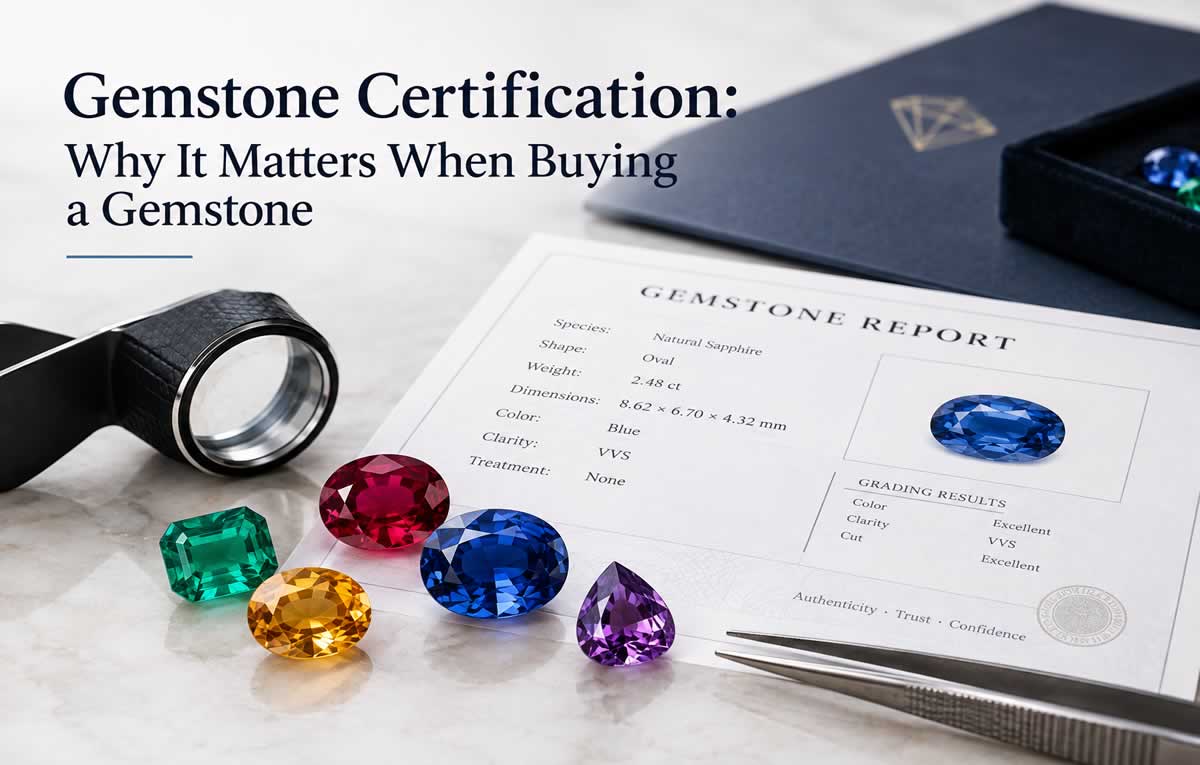
One of the best ways to verify a gemstone is through an independent gemological certificate.
A certificate may include:
- Gemstone identification
- Natural or synthetic origin
- Treatment disclosure
- Carat weight
- Measurements
- Color
- Clarity
- Photographs (in some reports)
Certificates provide confidence for buyers and are especially important for valuable gemstones.
Buying Tips for Genuine Gemstones
Before purchasing a gemstone, consider the following:
- Buy from reputable sellers.
- Ask if the gemstone is natural.
- Request information about treatments.
- Ask for certification when available.
- Compare similar gemstones.
- Review clear photographs and videos.
- Read the product description carefully.
- Keep purchase records and certificates.
An informed buyer is far less likely to be misled.
Common Myths About Gemstones
Myth 1: Flawless Means Natural
Not always. Many flawless stones are laboratory-grown or heavily treated.
Myth 2: Treated Gemstones Are Fake
False. Treated gemstones are natural gemstones that have undergone enhancement.
Myth 3: Synthetic Means Imitation
Incorrect. Synthetic gemstones have the same composition as natural stones but are grown in laboratories.
Myth 4: Every Expensive Gemstone Is Natural
Price alone does not guarantee authenticity. Certification and seller reputation remain essential.
Why Choose Imperial Gemstone?
At Imperial Gemstone, authenticity and transparency are at the heart of everything we do. We specialize in supplying carefully selected natural gemstones from trusted sources around the world, with clear product descriptions and honest disclosure of treatments whenever applicable.
When you purchase from Imperial Gemstone, you can expect:
- 100% Natural Earth-Mined Gemstones
- Honest Treatment Disclosure
- Premium Quality Loose Gemstones
- Carefully Inspected Stones
- Competitive Pricing
- Secure Worldwide Shipping
- Excellent Customer Support
- Certified Gemstones Available on Select Products
Whether you are a collector, jewelry designer, or first-time buyer, we are committed to helping you purchase with confidence.
Frequently Asked Questions
Are treated gemstones real?
Yes. Treated gemstones are natural gemstones that have been enhanced to improve color, clarity, or durability. Reputable sellers should always disclose these treatments.
Are synthetic gemstones fake?
No. Synthetic gemstones have the same chemical composition and physical properties as natural gemstones but are created in laboratories instead of forming naturally underground.
How can I tell if a gemstone is natural?
The most reliable method is to have it examined by a qualified gemologist or obtain an independent gemological certificate that confirms its origin and any treatments.
Do natural gemstones always contain inclusions?
Not always, but most natural gemstones have some internal characteristics. Completely flawless natural gemstones are rare and often command premium prices.
Why is certification important?
Certification verifies the gemstone’s identity, confirms whether it is natural or synthetic, and discloses any treatments. This helps buyers make informed decisions and supports the gemstone’s resale value.
Can I identify a synthetic gemstone at home?
Basic observations may reveal clues, but distinguishing high-quality synthetic gemstones from natural ones usually requires professional gemological equipment and expertise.
Conclusion
Understanding the difference between natural, treated, and synthetic gemstones is essential for anyone buying colored stones. Natural gemstones are prized for their rarity and unique formation, treated gemstones remain genuine but have been enhanced to improve their appearance, and synthetic gemstones offer the same composition as natural stones while being created in controlled laboratory environments.
By learning about gemstone characteristics, common treatments, and the importance of certification, you can make informed purchasing decisions and avoid confusion in the marketplace.
At Imperial Gemstone, we believe that transparency, authenticity, and education are the foundation of every successful gemstone purchase. Whether you’re investing in a rare collector’s specimen or selecting a beautiful gemstone for custom jewelry, our commitment is to provide genuine, high-quality gemstones backed by honest information and exceptional customer service.