Gemstone Luster Explained: Types, Quality & Identification
When buying or evaluating a natural gemstone, gemstone luster is one of the important visual characteristics to consider. Luster describes the way light interacts with the surface of a gemstone and how that surface appears when viewed under suitable lighting.
A gemstone can have excellent color and clarity, but its appearance may still be less attractive if the surface lacks good polish or if the stone naturally has a less reflective luster. Understanding gemstone luster can therefore help collectors, jewelry buyers, and gemstone enthusiasts make better purchasing decisions.
Luster is different from brilliance, fire, and transparency. These characteristics can work together to influence the overall appearance of a gemstone, but each describes a different property.
In this guide, we will explain what gemstone luster means, the main types of luster, what affects luster quality, how to identify it, and why it matters when buying natural gemstones.
What Is Gemstone Luster?
Gemstone luster is the appearance of a gemstone’s surface when light reflects from it. In simple terms, it describes whether the surface looks shiny, glass-like, metallic, silky, waxy, or dull.
Luster primarily depends on how light interacts with the gemstone’s surface and is influenced by factors such as:
- The gemstone’s refractive properties
- Surface polish
- Hardness
- Crystal structure
- Transparency
- Surface condition
- Presence of inclusions or fractures
- Cutting and finishing quality
A well-polished transparent gemstone may display a bright, glass-like surface reflection, while certain opaque minerals can have a metallic, waxy, or silky appearance.
It is important to remember that luster describes the surface appearance, while brilliance generally refers to the amount and quality of light returned from inside a transparent faceted gemstone.
Why Is Gemstone Luster Important?
Luster can have a significant effect on how attractive a gemstone appears.
When a gemstone has a clean and well-polished surface, light can interact with that surface effectively, creating a pleasing visual appearance. Poor polishing, scratches, abrasions, chips, or surface-reaching fractures can reduce the quality of the reflected light.
Good gemstone luster can make a stone appear:
- Brighter
- Cleaner
- More polished
- More attractive
- More visually appealing
- Better finished
However, the ideal luster depends on the gemstone species. A gemstone does not necessarily need an extremely bright surface to be valuable. Some gemstones are naturally known for distinctive luster types that contribute to their character.
Main Types of Gemstone Luster
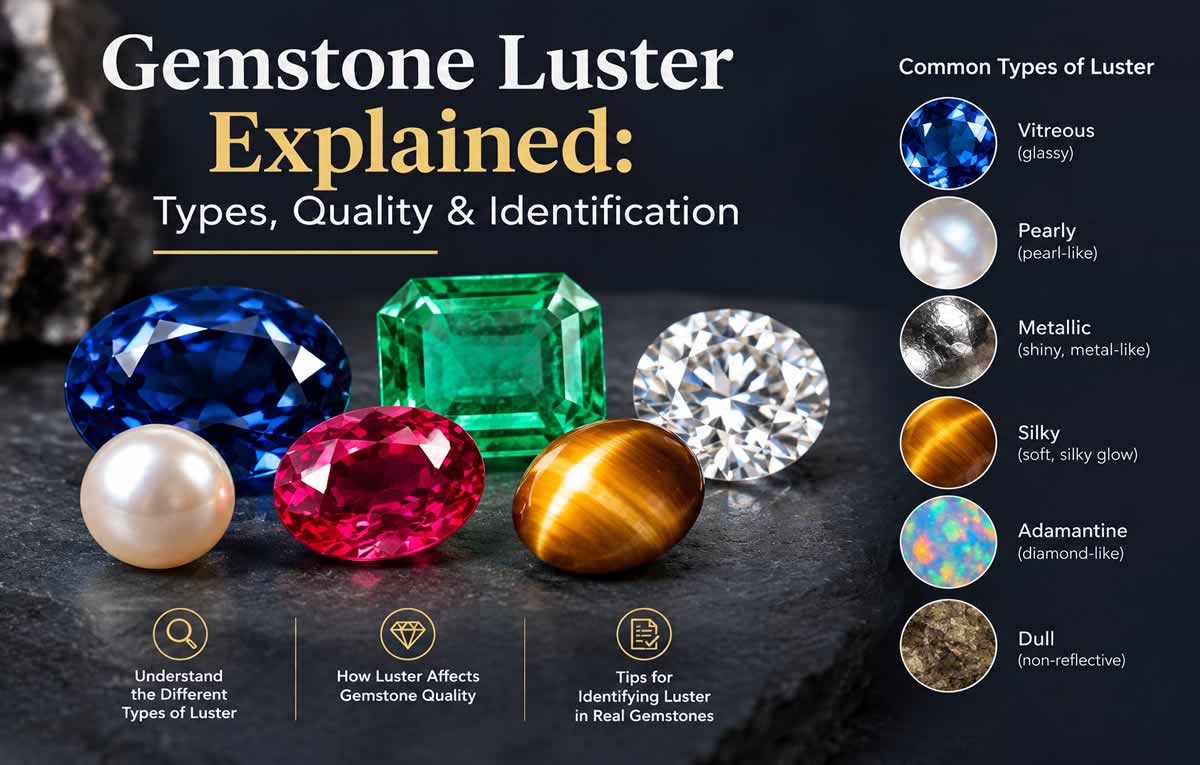
Gemologists commonly describe gemstone luster using several terms. The most important types include vitreous, adamantine, resinous, waxy, pearly, silky, greasy, metallic, and dull or earthy.
Let’s examine each type.
1. Vitreous Luster
Vitreous luster is one of the most common types of luster found in gemstones.
The word “vitreous” means glass-like. A gemstone with vitreous luster generally has a surface appearance similar to glass when properly polished.
Many popular transparent and translucent gemstones can display vitreous luster, including:
- Sapphire
- Ruby
- Amethyst
- Citrine
- Aquamarine
- Tourmaline
- Garnet
- Topaz
- Peridot
Vitreous luster is highly desirable in many faceted gemstones because it can contribute to a bright and attractive appearance.
2. Adamantine Luster
Adamantine luster is an exceptionally bright, intense, and diamond-like surface appearance.
The term comes from “adamant,” traditionally associated with extreme hardness and brilliance. Diamond is the classic example of a gemstone displaying adamantine luster.
This type of luster is associated with very strong surface reflections and is particularly noticeable when the gemstone is properly polished.
Diamond is the best-known example, although some other highly refractive materials may display an appearance approaching adamantine luster.
3. Resinous Luster
Resinous luster resembles the appearance of resin or certain types of hardened tree sap.
It tends to appear softer and less glass-like than vitreous luster. Some gemstones and minerals with a relatively warm, slightly glossy appearance may be described as resinous.
This type of luster is more commonly discussed in mineral identification than in the description of popular transparent faceted gemstones.
4. Waxy Luster
A gemstone or mineral with waxy luster has an appearance similar to wax.
The surface generally looks soft, smooth, and somewhat dull rather than sharply reflective.
Waxy luster is often associated with opaque or translucent materials. Jade is one example where a waxy to vitreous appearance can occur depending on the material and surface finish.
5. Pearly Luster
Pearly luster resembles the soft, attractive reflection seen on the surface of pearls.
It is usually associated with materials that have layered or sheet-like structures. The reflection can appear soft and slightly iridescent rather than sharply mirror-like.
Pearlescent effects can be particularly attractive because they create a gentle glow across the surface.
6. Silky Luster
Silky luster produces a soft, fibrous reflection that can resemble silk.
This appearance is commonly associated with gemstones containing fine, oriented needle-like or fibrous inclusions.
Some varieties of sapphire and other gemstones can display silky appearances when microscopic inclusions interact with light.
Silky luster can sometimes contribute to attractive optical phenomena, including asterism in certain cabochon-cut gemstones.
7. Greasy Luster
A greasy luster has an appearance somewhat similar to an oily surface.
Instead of producing a sharp glass-like reflection, the surface may appear soft, slightly oily, or diffused.
Certain minerals and gemstones can display greasy luster because of their surface properties or microscopic structure.
8. Metallic Luster
Metallic luster resembles the reflective appearance of a metal.
It is especially common in opaque metallic minerals rather than traditional transparent gemstones.
Examples of minerals with metallic luster include:
- Pyrite
- Hematite
- Galena
- Magnetite
These materials can produce strong, metal-like reflections and are often collected as mineral specimens.
9. Dull or Earthy Luster
A dull or earthy luster indicates very little surface reflection.
The material may appear matte, chalky, dusty, or earth-like instead of shiny.
Some rough minerals naturally have dull or earthy surfaces. However, a faceted gemstone intended for jewelry should normally have a properly polished surface unless its appearance is intentionally designed to be different.
Gemstone Luster vs. Brilliance
One of the most common mistakes among new gemstone buyers is confusing luster with brilliance.
Although they are related to light, they describe different characteristics.
Luster refers mainly to how the surface of the gemstone reflects light.
Brilliance refers to the amount and quality of light returned from within a transparent or translucent gemstone, particularly when it is faceted.
For example, a well-polished sapphire may have excellent vitreous luster. Its brilliance, however, will also depend on factors such as its refractive index, transparency, cut proportions, facet arrangement, and viewing conditions.
Therefore, a gemstone can have good surface luster without necessarily having exceptional brilliance.
Gemstone Luster vs. Fire
Fire is another characteristic that should not be confused with luster.
Fire refers to the flashes of spectral colors produced when white light is dispersed into its component colors.
Diamond is particularly famous for displaying fire.
Luster, on the other hand, describes the character of the surface reflection.
Therefore:
- Luster: Surface reflection
- Brilliance: Internal light return
- Fire: Spectral color flashes
- Transparency: How easily light passes through the material
Together, these characteristics influence the visual appearance of a gemstone.
What Determines Gemstone Luster?
Several factors can influence the luster that you see when examining a gemstone.
1. Natural Gemstone Properties
Different minerals naturally have different surface characteristics.
Crystal structure, chemical composition, hardness, refractive index, and other physical properties can influence the type of luster a gemstone displays.
This is why gemstones from different mineral families can look very different even when they have similar colors.
2. Surface Polish
Polishing is extremely important.
A well-polished gemstone can produce a cleaner and more attractive surface reflection. Poor polishing may result in a hazy, uneven, or dull appearance.
Polishing quality is particularly important for faceted gemstones because the facet surfaces need to be smooth and properly finished.
3. Scratches and Abrasions
Surface damage can significantly reduce apparent luster.
Fine scratches, abrasions, chips, and worn facet junctions can scatter light rather than reflecting it cleanly.
This is one reason older jewelry may appear less lively than a newly polished gemstone.
4. Inclusions
Inclusions can influence the overall appearance of a gemstone.
Some inclusions may reduce transparency and brilliance, while others can create attractive visual effects. Fine oriented inclusions can sometimes contribute to silky appearances or phenomena such as asterism.
Therefore, inclusions are not always negative, but their effect depends on their type, size, location, and overall appearance.
5. Surface Treatments
Some gemstones undergo treatments that can change their appearance.
Treatments such as polishing, coatings, fracture filling, or other enhancement processes may affect how light interacts with the gemstone’s surface.
When buying valuable natural gemstones, buyers should understand whether a stone has been treated and whether the treatment affects durability or care requirements.
How to Identify Gemstone Luster
Identifying gemstone luster does not always require sophisticated equipment. Careful observation under appropriate lighting can provide useful information.
Step 1: Clean the Gemstone
Before evaluating luster, make sure the gemstone is clean.
Dust, fingerprints, oils, and residue can make a gemstone look dull and can interfere with surface reflections.
Use an appropriate cleaning method for the specific gemstone.
Step 2: Examine It Under Good Lighting
Use bright, neutral lighting rather than relying on a very dark environment.
Move the gemstone slowly and observe how light reflects from different surfaces.
Step 3: Observe the Surface Reflection
Look closely at the gemstone’s surface.
Ask:
- Does it look glass-like?
- Is the reflection extremely bright?
- Does it appear soft or silky?
- Does the surface look waxy?
- Does it have a metallic appearance?
- Does it look dull or matte?
These observations can help you understand its luster.
Step 4: Examine the Polish
For faceted gemstones, inspect the facets and facet junctions.
A high-quality polish should generally produce smooth and clean reflections. Scratches, pits, uneven surfaces, or poorly polished areas can reduce the visual quality of the stone.
Step 5: Rotate the Gemstone
Rotate the gemstone under the light.
This allows you to observe how the surface reflection changes from different angles. It can also help distinguish surface luster from internal brilliance.
Does Better Luster Mean a More Valuable Gemstone?
Not necessarily.
Gemstone value is determined by multiple factors, and luster is only one part of the overall evaluation.
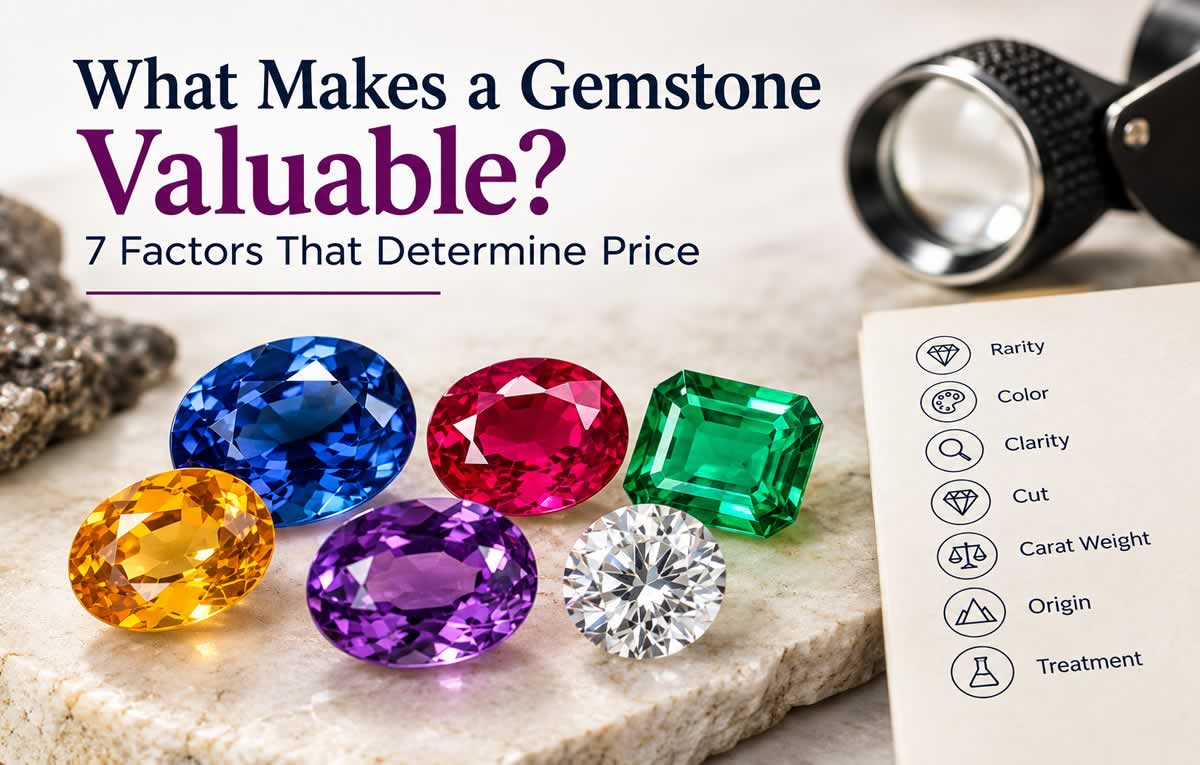
Color, clarity, cut, carat weight, rarity, origin, treatment, durability, market demand, and certification can all influence value.
For example, a sapphire with excellent color and rarity may be significantly more valuable than another sapphire with similar luster but weaker color or poorer overall quality.
However, poor polishing or severe surface damage can negatively affect the desirability of a gemstone.
Luster in Popular Gemstones
Different gemstones are known for different appearances.
Sapphire and Ruby
Sapphire and ruby commonly display vitreous luster when properly polished.
Their overall appearance is also strongly influenced by color, transparency, clarity, cut, and inclusions.
Emerald
Emerald commonly displays vitreous to resinous luster. Its appearance can be affected by inclusions and fractures, which are common characteristics of natural emerald.
Aquamarine
Aquamarine generally has a vitreous luster and can appear particularly bright when it has good transparency and an effective cut.
Garnet
Many garnets display vitreous luster. Their visual appearance can vary considerably depending on the particular garnet species and quality.
Tourmaline
Tourmaline commonly displays vitreous luster and can show impressive color and transparency when cut well.
Topaz
Topaz typically has a vitreous luster and can produce bright surface reflections when properly polished.
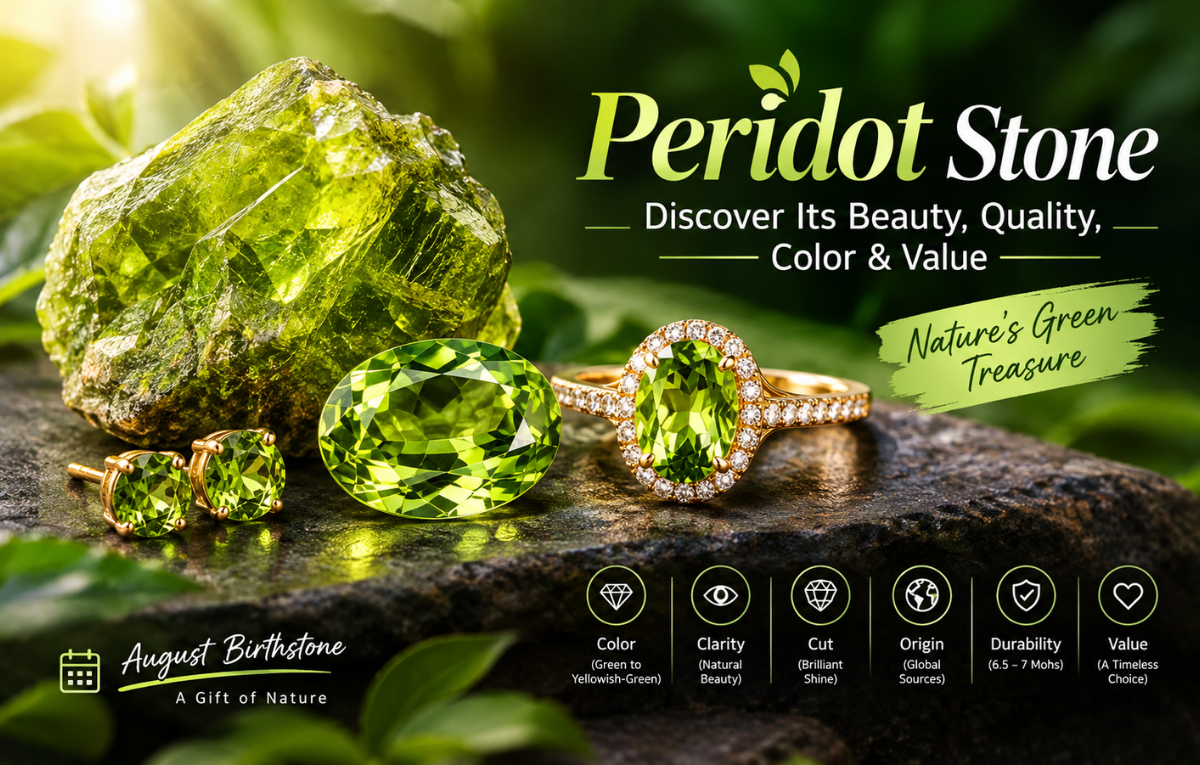
Peridot
Peridot generally displays a vitreous luster. Its green body color combined with good transparency and a quality cut can create an attractive appearance.
Can Luster Help Identify a Natural Gemstone?
Luster can provide useful clues during gemstone identification, but luster alone cannot prove that a gemstone is natural.
A gemologist normally uses multiple characteristics to identify a gemstone, including:
- Refractive index
- Specific gravity
- Optical properties
- Hardness
- Absorption spectrum
- Inclusions
- Fluorescence
- Microscopic features
- Chemical composition
- Treatment indicators
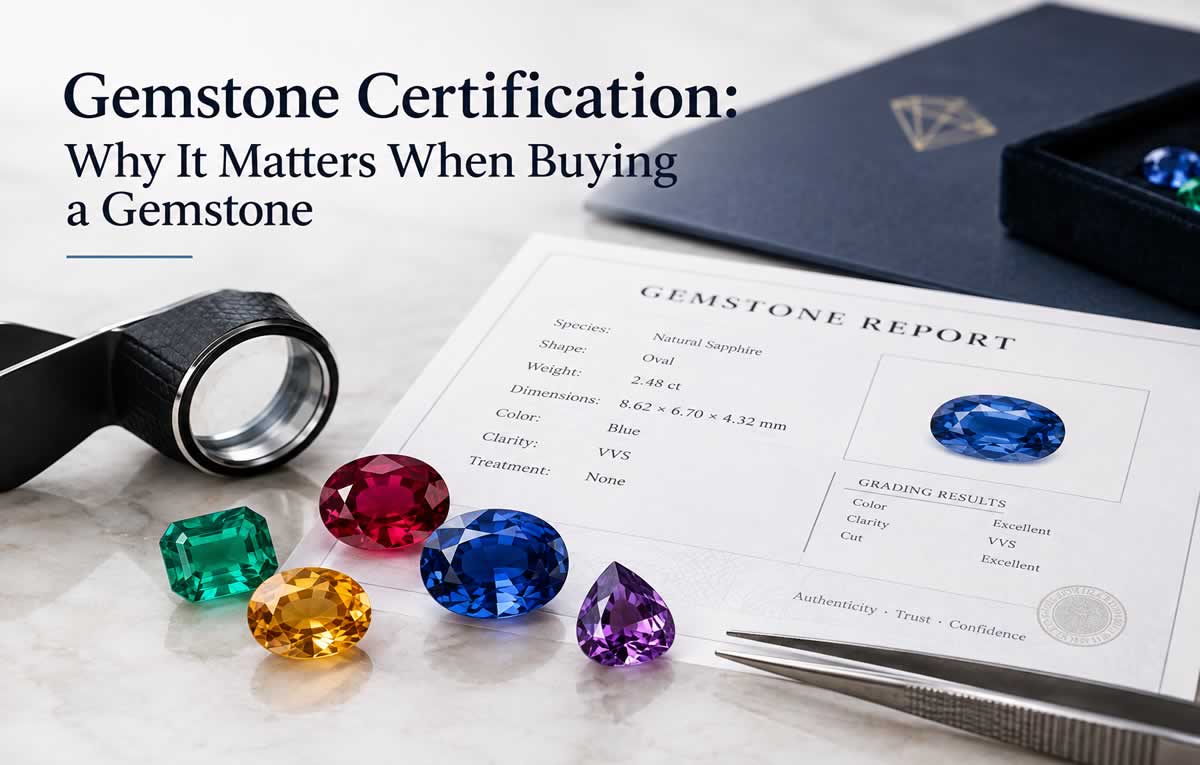
For valuable gemstones, professional laboratory testing and a reliable gemological report provide much stronger evidence than visual inspection alone.
Does Cutting Affect Gemstone Luster?
Cutting does not fundamentally change the mineral’s natural luster, but the quality of cutting and polishing can have a major effect on how the gemstone appears.
A well-cut and well-polished gemstone can present its surfaces more effectively to the light.
Important factors include:
- Facet symmetry
- Proportions
- Facet angles
- Polish quality
- Surface condition
- Cut style
This is why two gemstones made from similar material can have noticeably different appearances.
How Luster Affects the Appearance of Loose Gemstones
When purchasing loose gemstones, luster is particularly useful when comparing stones under the same lighting conditions.
A gemstone with a clean surface and excellent polish may appear more attractive than another stone with similar color and clarity but poor finishing.
When comparing loose gemstones, examine each stone for:
- Surface brightness
- Polish quality
- Scratches
- Abrasions
- Facet condition
- Transparency
- Color
- Internal reflections
- Overall liveliness
Remember that gemstone luster should be evaluated together with the stone’s other characteristics.
Luster and Gemstone Photography
Gemstone luster also affects gemstone photography.
Highly reflective gemstones can create bright highlights that make their surfaces appear exceptionally polished. However, excessive direct lighting can sometimes create distracting reflections.
Professional gemstone photography often uses carefully controlled lighting to show:
- Color
- Transparency
- Cut
- Facet reflections
- Surface quality
- Internal characteristics
When shopping online, remember that photographs can be influenced by lighting, camera settings, editing, and background. Whenever possible, evaluate multiple images or videos and review the gemstone’s specifications and certification.
How to Buy a Gemstone With Good Luster
If surface appearance is important to you, consider the following checklist before buying:
- Inspect the polish – Look for smooth, clean facet surfaces.
- Check for scratches – Avoid significant surface abrasions.
- Examine the gemstone under different angles – Observe how it reflects light.
- Compare similar stones – Viewing multiple gemstones can make differences easier to notice.
- Consider transparency – Transparency can strongly influence overall appearance.
- Review treatment information – Understand whether the gemstone has been enhanced.
- Check the cut – Good cutting and finishing can improve the stone’s visual performance.
- Request certification for valuable stones – A professional report can help verify important characteristics.
Final Thoughts on Gemstone Luster
Gemstone luster is an important characteristic that describes how a gemstone’s surface interacts with light. From the glass-like appearance of vitreous luster to the intense reflection of adamantine luster and the soft appearance of silky or pearly luster, different gemstones can display a wide range of surface appearances.
Understanding luster can help you evaluate gemstone quality, polish, and overall visual appeal. However, luster should never be considered by itself when determining gemstone value or authenticity.
Color, clarity, cut, carat weight, rarity, origin, treatment, transparency, durability, and certification should all be considered when evaluating a natural gemstone.
Whether you are buying a loose sapphire, ruby, emerald, garnet, tourmaline, aquamarine, or another natural gemstone, learning how to recognize gemstone luster will give you another useful skill for comparing stones and making more informed purchasing decisions.