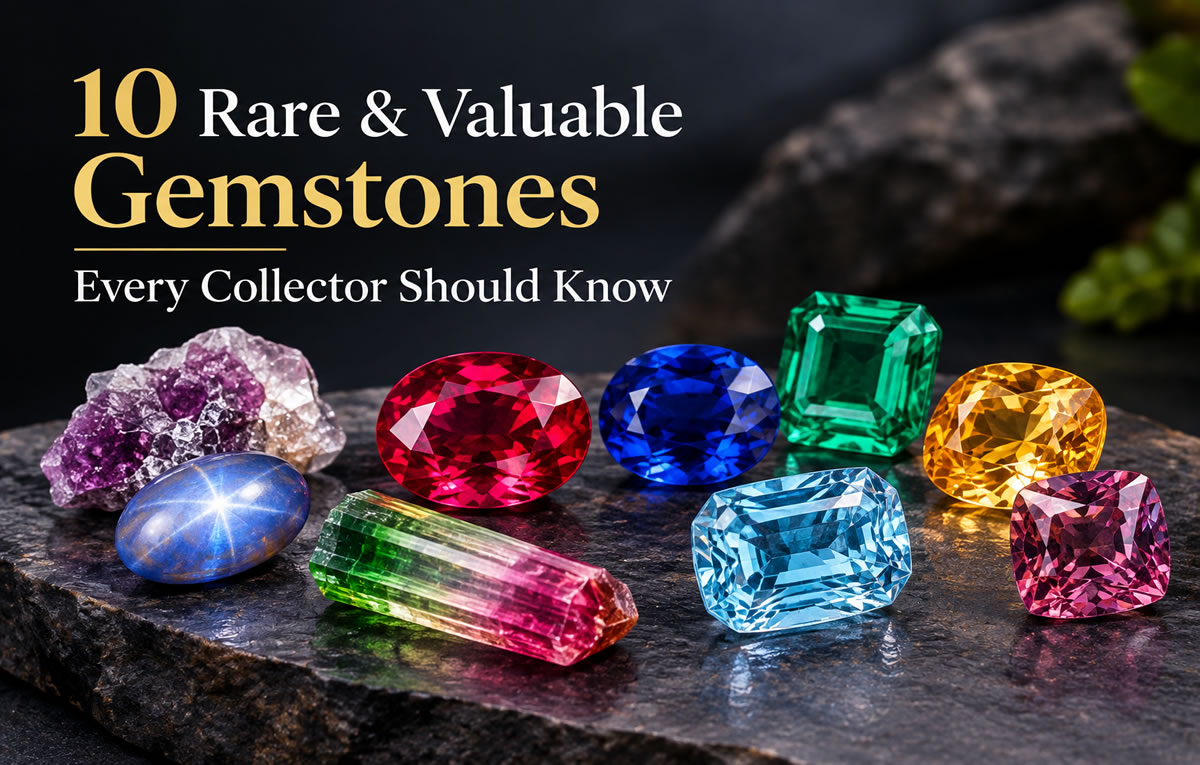
10 Rare & Valuable Gemstones Every Collector Should Know
Gemstones have fascinated collectors for centuries. Their beauty, rarity, geological history, and remarkable colors make them much more than beautiful materials for jewelry. Some gemstones are relatively common, while others are exceptionally rare and can command significant prices when they possess outstanding color, clarity, size, origin, and provenance.
For serious collectors, understanding the world’s rare and valuable gemstones is an important part of developing a knowledgeable collection.
Rare gemstones can come from famous mining regions across the world, including Sri Lanka, Myanmar, Colombia, Zambia, Brazil, Madagascar, Pakistan, Tanzania, and other locations. Some varieties are valued because of their extraordinary color, while others are prized for unusual optical phenomena, exceptional rarity, or limited availability.
In this guide, we explore 10 rare and valuable gemstones that every gemstone collector should know.
What Makes a Gemstone Rare and Valuable?
Before exploring individual gemstones, it is important to understand what makes a gemstone desirable to collectors.
Several factors can influence gemstone value:
- Rarity
- Color
- Clarity
- Cut
- Carat weight
- Origin
- Treatment
- Durability
- Optical phenomena
- Provenance
- Market demand
Rarity alone does not guarantee a high price. A gemstone must generally combine rarity with desirable quality characteristics to become exceptionally valuable.
For example, a large gemstone may be rare because of its size, but if its color is unattractive or its clarity is poor, its value may not be comparable to a smaller stone of exceptional quality.
1. Alexandrite
Alexandrite is one of the most fascinating gemstones in the world because of its remarkable color-changing phenomenon.
Under daylight or natural light, fine alexandrite can appear green, bluish-green, or greenish. Under incandescent or warm artificial lighting, it can shift toward reddish, purplish, or raspberry tones.
This dramatic color change is caused by the gemstone’s interaction with different wavelengths of light.
Why Is Alexandrite Valuable?
Fine alexandrite is rare, particularly stones with:
- Strong color change
- Attractive green daylight color
- Rich red or purplish-red incandescent color
- Good transparency
- Fine clarity
- Larger carat weight
Natural alexandrite of exceptional quality can be highly sought after by collectors.
The gemstone is a variety of chrysoberyl, and its scarcity in fine quality contributes significantly to its desirability.
Alexandrite for Collectors
Collectors should pay close attention to whether an alexandrite is natural or synthetic and whether its color-changing effect is strong.
Independent laboratory certification can be particularly valuable for expensive natural alexandrite.
2. Paraíba Tourmaline
Paraíba tourmaline is famous for its extraordinary neon blue to blue-green colors.
Its intense color is one of the main reasons it became one of the most desirable tourmalines in the gemstone market.
The original material associated with Paraíba, Brazil, became particularly famous for vivid copper-bearing tourmalines.
What Makes Paraíba Tourmaline Special?
The most desirable examples can display highly saturated colors ranging from:
- Neon blue
- Electric blue
- Blue-green
- Greenish-blue
The color can be remarkably intense even in relatively small gemstones.
Paraíba Tourmaline Value
Fine Paraíba tourmaline can command significant prices when it combines exceptional color, good transparency, attractive cut, and desirable provenance.
Because copper-bearing tourmaline has also been discovered in other locations, collectors should pay attention to laboratory reports and treatment information when purchasing high-value material.
3. Kashmir Sapphire
Kashmir sapphire is legendary among gemstone collectors.
The finest Kashmir sapphires are renowned for their beautiful, velvety blue color, often described as having a soft or slightly hazy appearance caused by microscopic inclusions.
The historic Kashmir sapphire deposits produced some of the world’s most famous blue sapphires.
Why Is Kashmir Sapphire So Rare?
The original Kashmir deposits are no longer producing sapphire in the quantities associated with their historic production.
This limited supply, combined with exceptional color and historical importance, has made fine Kashmir sapphire highly collectible.
Collectors should be particularly cautious about claims regarding Kashmir origin.
A laboratory determination of geographic origin is important when a gemstone is being sold as a genuine Kashmir sapphire.
4. Burmese Ruby
Fine ruby from Myanmar, historically known as Burma, is among the most celebrated ruby material in the world.
The finest examples can display an intense, saturated red color that collectors particularly prize.
Some exceptional Burmese rubies are described using the traditional term “pigeon blood”, although terminology and grading standards can vary between laboratories and markets.
Why Is Burmese Ruby Valuable?
Factors contributing to the desirability of fine Burmese ruby include:
- Strong red color
- High saturation
- Good transparency
- Attractive fluorescence
- Fine clarity
- Natural, untreated condition
- Desirable geographic origin
Exceptional untreated Burmese rubies of significant size can be extraordinarily rare.
Ruby Treatment Matters
Many rubies on the market are treated, particularly through heat treatment.
For collectors, untreated material with laboratory documentation can be particularly desirable.
5. Colombian Emerald
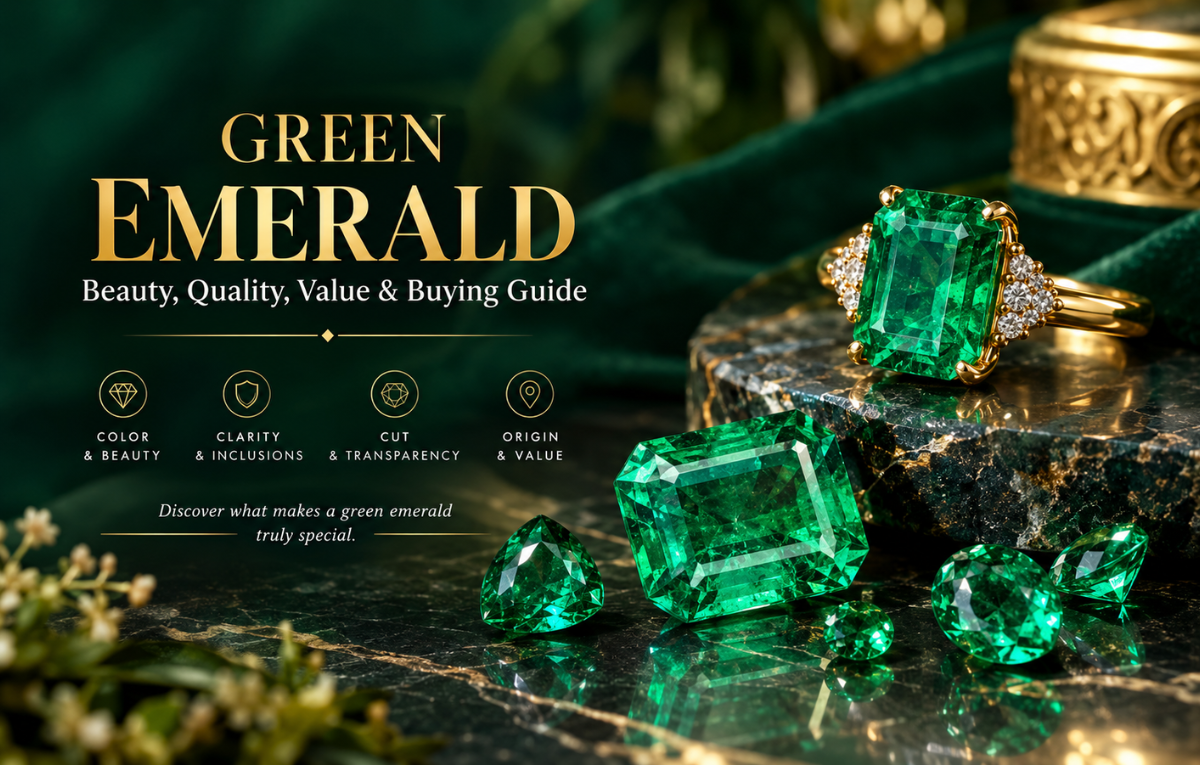
Colombian emeralds are among the world’s most famous emeralds.
They are prized for their beautiful green colors, which can range from bluish-green to strongly saturated green.
Historic Colombian mining regions such as Muzo and Chivor have contributed significantly to the gemstone’s reputation.
What Makes Colombian Emeralds Valuable?
Fine Colombian emeralds may possess:
- Strong green color
- Attractive saturation
- Good transparency
- Fine crystal characteristics
- Desirable origin
- Exceptional size
Natural emeralds commonly contain inclusions. These inclusions are not necessarily a negative characteristic and can be part of the gemstone’s natural identity.
Colombian Emerald Certification
When geographic origin significantly influences price, collectors should consider an independent laboratory report.
A laboratory may be able to provide an opinion on geographic origin, although origin determination is not always possible or conclusive.
6. Red Beryl
Red beryl is one of the rarest gemstones known.
It is sometimes called bixbite, although the name red beryl is commonly preferred.
Red beryl is famous for its intense red to raspberry-red color and its exceptional rarity.
Why Is Red Beryl So Rare?
Gem-quality red beryl is found in very limited quantities.
Fine crystals suitable for faceting are uncommon, and larger transparent stones are exceptionally rare.
Because of this, even relatively small faceted red beryl gemstones can be highly collectible.
Red Beryl for Collectors
When evaluating red beryl, collectors should consider:
- Color
- Transparency
- Clarity
- Cut
- Size
- Natural origin
- Certification
Because high-quality material is so scarce, authentic natural specimens can be particularly interesting additions to advanced collections.
7. Paraíba-Style Copper-Bearing Tourmaline
Copper-bearing tourmaline from locations outside the original Brazilian Paraíba locality can also display extraordinary neon colors.
Copper-bearing tourmalines have been discovered in areas including parts of Africa.
The gemstone market often places considerable emphasis on the chemistry and color rather than simply geographic location.
Why Collectors Like Copper-Bearing Tourmaline
These stones can offer:
- Exceptional neon color
- Strong saturation
- Attractive blue and green hues
- Excellent brilliance
- Significant rarity in fine quality
Because geographic origin can be complicated, collectors should rely on laboratory reports rather than assumptions based solely on appearance.
8. Musgravite
Musgravite is an exceptionally rare gemstone belonging to the taaffeite family.
It was first identified in the Musgrave region of South Australia.
Its colors can include grayish-green, green, gray, brownish, and purplish tones.
Why Is Musgravite Valuable?
Facetable musgravite is extremely uncommon.
The combination of scarcity and collector interest has made it one of the gemstones frequently discussed among enthusiasts of rare gem materials.
Because musgravite can be confused with other gemstones, laboratory identification is especially important for valuable specimens.
9. Taaffeite
Taaffeite is famous for its unusual discovery story.
A gemstone that was initially believed to be spinel was later identified as a different mineral species.
This makes taaffeite particularly interesting from a historical and gemological perspective.
It can occur in colors including:
- Pink
- Mauve
- Lavender
- Violet
- Grayish
- Reddish
Why Is Taaffeite So Rare?
Taaffeite is considerably rarer than many well-known gemstones.
Fine-quality faceted specimens are particularly attractive to collectors because of their scarcity and unusual history.
For expensive taaffeite, independent laboratory identification is strongly recommended.
10. Kashmir-Type and Exceptional Color-Change Sapphires
Color-change sapphire is another fascinating category for collectors.
These sapphires can display different colors under different lighting conditions.
Depending on the gemstone, the color may shift between combinations such as:
- Blue and purple
- Green and reddish-purple
- Blue and violet
Exceptional color-change sapphires can be highly attractive and collectible.
What Makes Color-Change Sapphire Valuable?
Collectors generally consider:
- Strength of color change
- Quality of each color
- Clarity
- Cut
- Carat weight
- Natural or synthetic status
- Treatment
- Origin
A strong and attractive color change can significantly increase a sapphire’s appeal.
Other Rare Gemstones Collectors Should Know
The gemstone world contains many other rare materials that deserve attention.
Some include:
- Jeremejevite
- Benitoite
- Grandidierite
- Poudretteite
- Painite
- Demantoid garnet
- Fine Paraíba tourmaline
- Natural color-change garnet
- Fine Kashmir sapphire
- Exceptional natural spinel
The rarity and value of these stones can vary significantly depending on quality and market conditions.
Rare Does Not Always Mean Expensive
One of the biggest misconceptions about gemstones is that rarity automatically determines value.
A gemstone can be extremely rare but relatively unknown or unattractive.
Conversely, a gemstone that is not among the rarest minerals can become highly valuable when it has exceptional color, clarity, size, origin, and provenance.
For collectors, the most desirable combination is often:
Rarity + Beauty + Quality + Provenance + Demand
This combination can make a gemstone particularly interesting from both a collecting and historical perspective.
Natural vs. Synthetic Rare Gemstones
Collectors should always determine whether a gemstone is natural or laboratory-created.
A synthetic gemstone may have essentially the same chemical composition and crystal structure as its natural counterpart, but it is produced artificially rather than formed naturally underground.
For a collector interested specifically in natural gemstones, laboratory identification can be extremely important.
This is especially relevant for rare gemstone varieties where synthetic or imitation materials may exist.
Why Treatment Matters to Collectors
Treatment is another major consideration.
Some gemstone treatments are common and widely accepted in the jewelry industry.
Examples include:
- Heat treatment
- Oiling
- Fracture filling
- Diffusion
- Irradiation
- Surface coatings
Treatment does not automatically make a gemstone undesirable.
However, an exceptional untreated natural gemstone can be considerably rarer than a treated example of similar appearance.
Collectors should therefore ask for complete treatment information before purchasing expensive gemstones.
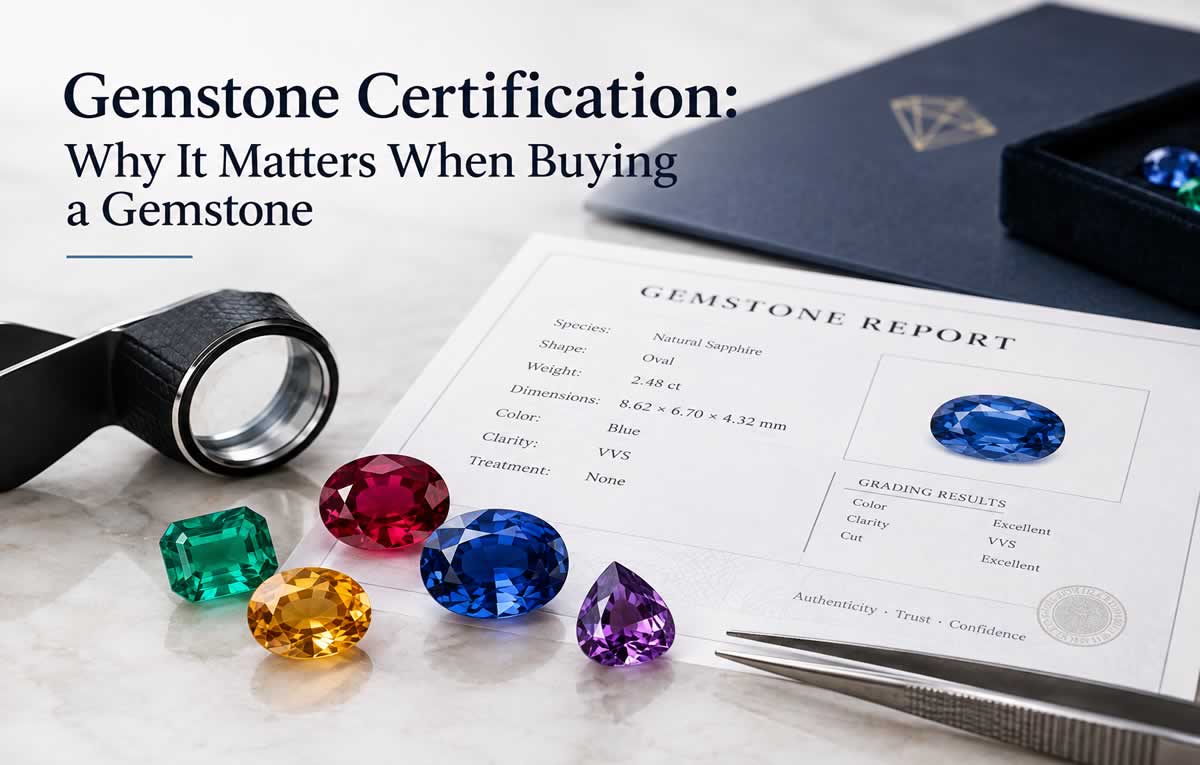
The Importance of Gemstone Certification
Certification can be extremely valuable when purchasing rare or expensive gemstones.
A professional gemological laboratory may provide information about:
- Natural or synthetic status
- Gemstone identity
- Treatment
- Weight
- Measurements
- Geographic origin, when determinable
A laboratory report does not necessarily determine the monetary value of a gemstone, but it can provide important scientific information about the stone.
For rare gemstones, certification can also help protect buyers against misidentification or inaccurate origin claims.
How to Start a Rare Gemstone Collection
You do not need to begin with extremely expensive gemstones.
A thoughtful collection can start with smaller specimens that have interesting characteristics.
Start With Education
Learn about gemstone species, varieties, treatments, origins, and market terminology.
Choose a Collecting Theme
You could collect gemstones based on:
- Color
- Geographic origin
- Mineral species
- Optical phenomena
- Historical significance
- Unusual rarity
- Untreated gemstones
Buy Quality Over Size
A smaller gemstone with exceptional color and characteristics can be more interesting than a much larger gemstone of mediocre quality.
Keep Documentation
Keep laboratory reports, invoices, photographs, and provenance information with your gemstones.
Documentation can become increasingly important as the collection grows.
How to Store Rare Gemstones
Proper storage is essential for protecting a gemstone collection.
Store gemstones individually to prevent scratching and damage.
Good practices include:
- Use individual gemstone boxes or pouches
- Keep harder stones away from softer materials
- Avoid unnecessary exposure to heat
- Protect gemstones from chemicals
- Keep certificates with the corresponding stones
- Maintain records of purchases and laboratory reports
For valuable collections, consider appropriate insurance and secure storage.
Are Rare Gemstones a Good Investment?
Rare gemstones can be collectible assets, but they should not automatically be viewed as guaranteed investments.
Prices can change depending on:
- Market demand
- Economic conditions
- Fashion trends
- Supply
- Quality
- Origin
- Treatment
- Provenance
- Certification
Buying gemstones purely because they are described as “rare” can be risky.
Collectors should prioritize knowledge, authenticity, quality, and personal interest rather than assuming that every rare gemstone will increase in value.
Common Mistakes Rare Gemstone Collectors Should Avoid
Buying Based on Origin Claims Alone
A seller’s claim about geographic origin should ideally be supported by laboratory testing.
Assuming Every Rare Gemstone Is Valuable
Rarity is only one part of value.
Ignoring Treatment
Treatment can have a major effect on rarity and market desirability.
Buying Without Documentation
For expensive gemstones, documentation is important.
Focusing Only on Carat Weight
A large gemstone is not automatically more desirable than a smaller stone with exceptional quality.
Trusting Photographs Completely
Lighting and photography can significantly affect gemstone appearance. Whenever possible, inspect the gemstone in person or request reliable visual information.
Frequently Asked Questions About Rare & Valuable Gemstones
What is the rarest gemstone in the world?
There is no single universally accepted “rarest gemstone.” Several minerals and gem varieties are exceptionally rare, including red beryl, musgravite, taaffeite, and certain exceptional examples of alexandrite and other gemstones.
Which gemstones are most valuable?
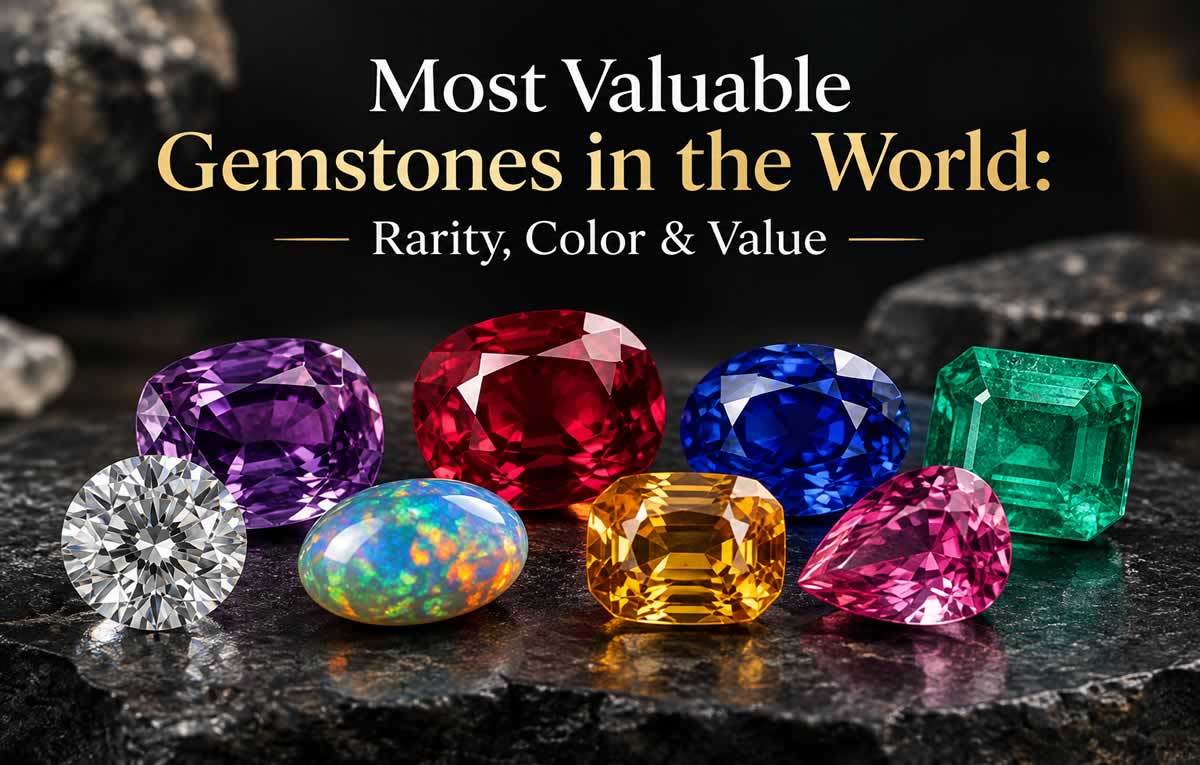
Exceptional ruby, sapphire, emerald, alexandrite, and Paraíba tourmaline can command very high prices. Value depends heavily on quality, rarity, origin, treatment, size, and provenance.
Is alexandrite rarer than sapphire?
Fine natural alexandrite is considerably rarer than ordinary sapphire, particularly when it has a strong and attractive color change. However, rarity and value depend on the quality and characteristics of each individual gemstone.
Why is Kashmir sapphire so valuable?
Fine Kashmir sapphire is famous for its distinctive blue color, historical importance, and scarcity. The limited availability of material from the historic Kashmir deposits contributes to its collector appeal.
Are untreated gemstones more valuable?
Exceptional untreated gemstones can command significant premiums because they are naturally rare. However, treatment preferences and price differences vary by gemstone type and market.
How can I tell if a rare gemstone is genuine?
The safest approach for a valuable gemstone is professional gemological testing. Visual inspection alone may not reliably distinguish natural, synthetic, treated, or imitation materials.
Does gemstone origin affect value?
Yes. Geographic origin can significantly affect the value of certain gemstones, especially those associated with famous historical sources. However, origin should be established through reliable laboratory testing whenever it materially affects the price.
Are rare gemstones good for jewelry?
Some rare gemstones are suitable for jewelry, while others may be too soft, fragile, or sensitive for everyday wear. Durability should always be considered before setting a rare gemstone in a ring or other frequently worn piece.
Final Thoughts
The world of rare gemstones is fascinating because every stone tells a story about geology, geography, history, and human craftsmanship.
Alexandrite, Paraíba tourmaline, Kashmir sapphire, Burmese ruby, Colombian emerald, red beryl, musgravite, taaffeite, and exceptional color-change sapphires represent just a small selection of the remarkable materials available to collectors.
When building a gemstone collection, remember that rarity is only one part of the equation. Color, clarity, cut, carat weight, treatment, origin, certification, provenance, and overall beauty all contribute to a gemstone’s desirability.
Most importantly, buy from reputable sources and obtain independent laboratory documentation when purchasing valuable stones.
Whether you are an experienced collector or just beginning your journey into gemstones, learning about rare and valuable gemstones can make collecting more rewarding and help you recognize the characteristics that make exceptional stones truly special.