Every gemstone brings something of its own to jewelry, but not many actually hold your attention the way a green emerald does. Rich color, those distinctive natural inclusions — emerald’s been one of the most recognizable colored gemstones for centuries now. Buyers in the USA today run into emeralds across all kinds of sizes, qualities, origins, and treatments, which is exactly why it’s worth knowing what you’re actually paying for before you commit to one.
Ring, pendant, earrings, a collection piece, something bought with resale in mind — whatever the reason, getting a handle on color, clarity, cut, carat weight, and treatment just makes for a smarter purchase.
What Is a Green Emerald?
A green emerald is basically the green to bluish-green version of beryl, the same mineral family that gives us aquamarine too. That signature color comes down to trace elements — chromium and vanadium specifically. GIA’s take is that the most desirable emerald colors land somewhere between bluish green and pure green, with real vivid saturation behind it.
Not every green stone earns the name “emerald” though. Very light green beryl actually gets labeled green beryl instead, not emerald. Worth knowing that distinction, since it matters when you’re comparing stones or trying to figure out what something’s actually worth on the market.
Why Emerald Color Matters
Color’s arguably the single biggest factor in judging a green emerald. Vivid and evenly spread green looks a lot better than something excessively dark, too washed out, or patchy across the surface.
If you’re buying in the USA, lining up a few stones under the exact same lighting makes spotting differences in hue, tone, and saturation a lot easier than eyeballing them separately. GIA’s position here is pretty clear — the most desirable emeralds combine strong color with good transparency, not just one or the other.
Understanding Emerald Clarity
Diamonds get judged on being clean inside. Emeralds don’t really work that way — they almost always carry visible internal features. People call these inclusions “jardin,” French for garden, because some of them genuinely look like a little garden scene trapped inside the stone.
Looking at a green emerald, it helps to know upfront that inclusions aren’t automatically a red flag. Eye-clean natural emeralds are actually the rare exception, not the norm. Where the inclusions sit, how big they are, how much they mess with transparency — all of that shapes what the stone actually looks like once it’s cut and set.
A stone can carry good color and still have acceptable inclusions and end up being a genuinely beautiful piece of jewelry regardless.
Popular Emerald Cuts
Cut matters a lot here — it’s what actually lets a green emerald show off its color and brilliance properly. The emerald cut itself, that rectangular step-cut style, is basically named after this exact stone because they’re so closely tied together.
That said, emeralds show up in oval, cushion, pear, round, plenty of other shapes too. Whoever’s cutting the rough crystal has to weigh color, fractures, durability, and inclusions before landing on a final shape — it’s not a one-size-fits-all decision.
Get the cut right and you showcase the stone while pulling attention away from whatever internal quirks aren’t as flattering.
Green Emerald Origins
A green emerald can trace back to a handful of places worldwide — Colombia, Zambia, Brazil, and a few other producing regions each bring their own flavor to the table. Different sources tend to yield stones with slightly different looks.
Colombian stones usually lean warmer, more intensely green. Zambian ones tend to read cooler, more bluish-green. That said, GIA’s pretty clear that these traits overlap quite a bit between sources, so where a stone comes from doesn’t automatically tell you how good it actually is.
For buyers, the stone’s own characteristics should really stay front and center when comparing options — not just the label of where it came from.
Natural and Treated Emeralds
Shopping for a green emerald means understanding treatment too, not just color and cut. Emeralds commonly carry surface-reaching fractures, and clarity enhancement — oils, waxes, resins — usually gets used to make those fractures less visible.
Treatment on its own doesn’t make an emerald a bad choice. What actually matters is whether you know a stone’s been treated, and whether there’s documentation you can actually look at when it’s available.
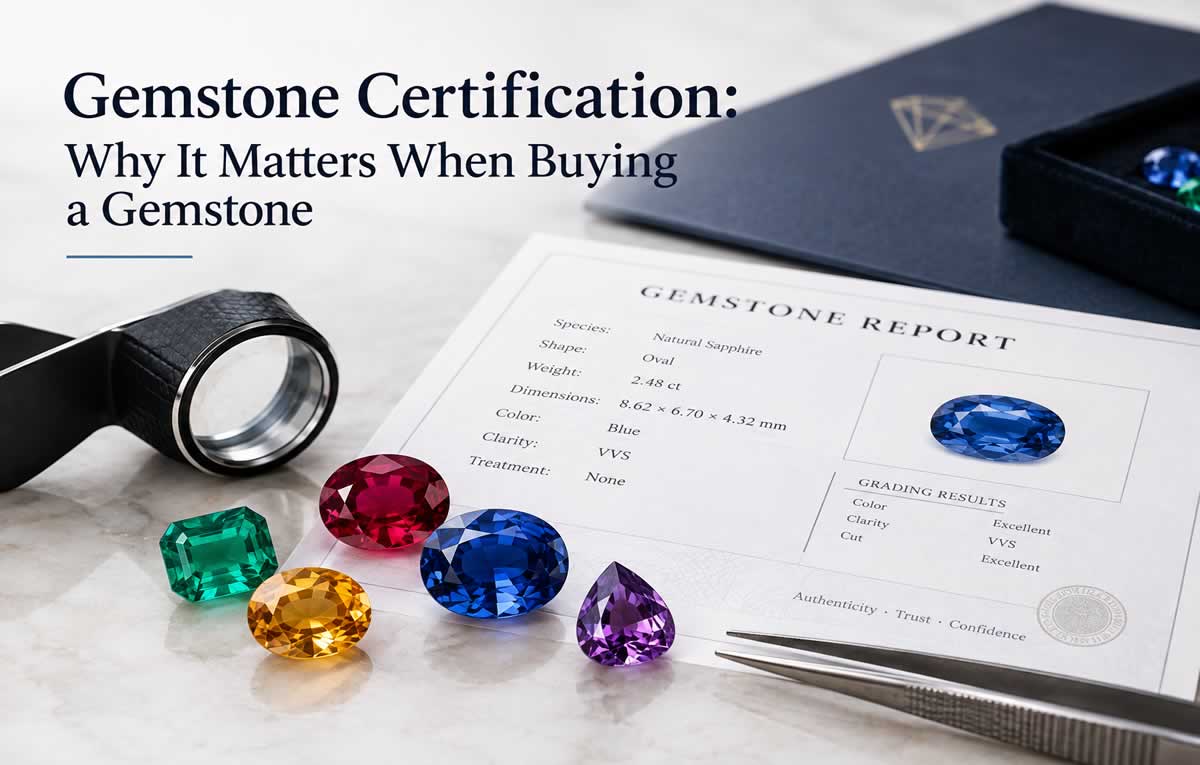
For bigger purchases specifically, an independent lab report tells you whether a gemstone’s natural or lab-grown, and flags any detectable treatments. GIA reports can also offer an opinion on geographic origin, if that’s something you specifically request.
Choosing the Right Green Emerald
Picking a green emerald really starts with what you’re actually going to use it for, plus your budget. Everyday jewelry has different requirements than something bought mainly to sit in a private collection.
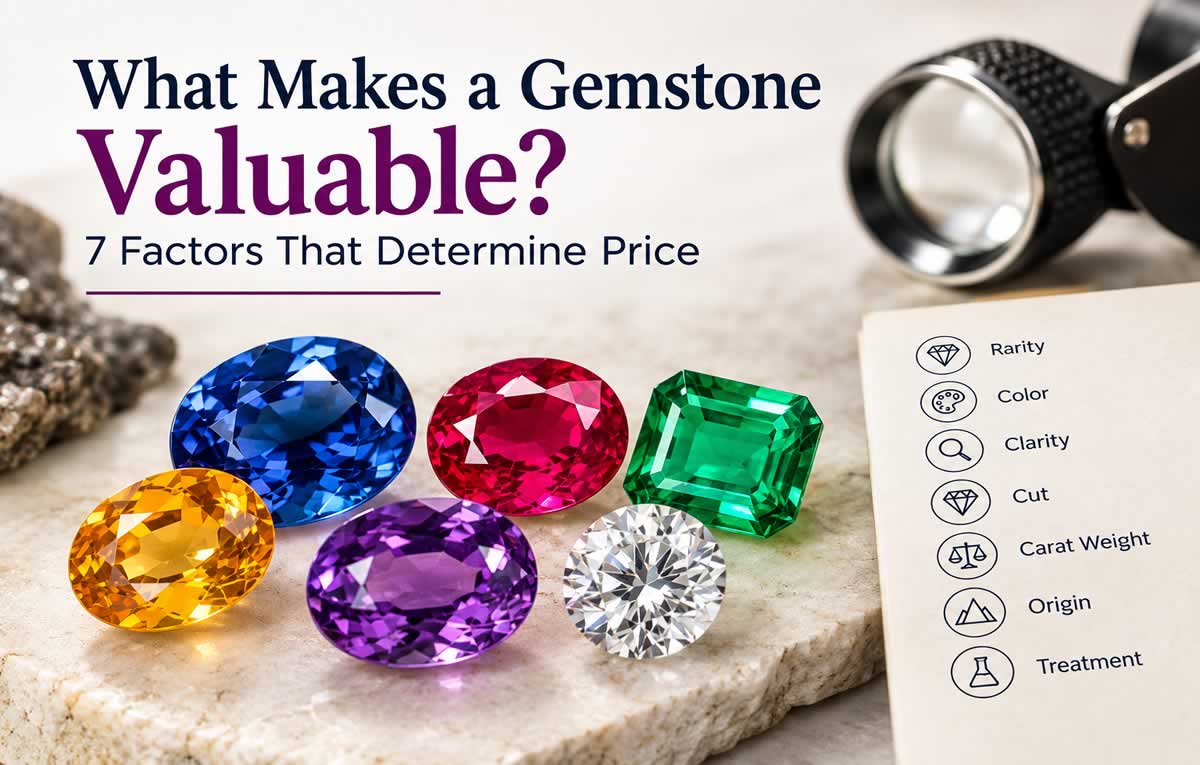
A decent order to work through when comparing stones:
- Look at color first, before anything else
- Check transparency and inclusions next
- Weigh cut quality
- Factor in carat weight
- Review whatever treatment information is available
Rather than chasing size above everything, think about how well all these characteristics actually come together visually on the stone in front of you. A smaller emerald with genuinely vivid color and good transparency can end up appealing more than a bigger one dragged down by weak color or serious clarity issues.
Emeralds for Jewelry
A green emerald looks great in rings, necklaces, earrings, bracelets, custom pieces — really any setting. That color creates a natural focal point on its own and pairs well with a lot of different metal tones and design styles.
Hardness-wise, emerald sits around 7.5 to 8 on the Mohs scale — decent scratch resistance, but it still needs more careful handling than a diamond would. Natural fractures also make emeralds a bit more prone to damage generally.
For rings especially, or anything worn regularly, protective settings and careful handling genuinely go a long way in keeping the stone intact over time.
How to Care for Your Emerald
Keeping a green emerald looking good for years really comes down to proper care. Emeralds with clarity treatments need extra attention specifically, since fillers can react badly to heat, chemicals, or other rough conditions. GIA’s advice is to avoid any exposure that might damage or alter those filling materials.
Cleaning Guidelines
Gentle cleaning is basically the safer default here, across the board.
Things to Avoid
- Harsh chemicals
- Extreme heat
- Ultrasonic cleaning
- Steam cleaning
Skip all of these unless a qualified professional specifically confirms the stone and its treatment can actually handle it safely.
Buying a Green Emerald in the USA
Buying a green emerald in the USA really comes down to transparency about what you’re getting. Ask directly whether it’s natural, lab-grown, or treated, and ask for documentation whenever that’s on offer.
Compare photographs, measurements, carat weight, color, clarity characteristics, and whatever lab information exists — don’t just go by size alone. For anything significant money-wise, an independent report adds real confidence about identity and characteristics. At Imperial Gemstone, shoppers can browse gemstone options while weighing whichever characteristics actually matter most for what they’re after specifically.
Why Green Emerald Remains Popular
The appeal of a green emerald really goes beyond just the color itself. Natural inclusions, historical weight, a distinctive crystal structure, and a genuinely wide range of looks give every single stone its own character.
Unlike gemstones where flawless clarity is the whole point, an emerald’s internal world tends to get treated as part of its identity rather than something wrong with it. That’s exactly what makes each stone visually different from the next, and gives buyers real room to pick something that actually fits their own taste.
For gemstone shoppers in the USA, understanding these distinctions genuinely makes the whole process more enjoyable, and a lot more practical too.
Frequently Asked Questions
Is a green emerald a real emerald?
A green emerald is generally the green to bluish-green variety of beryl, provided its color meets the characteristics used to classify it as emerald.
What color is best for emeralds?
A green emerald with vivid, evenly distributed green to bluish-green color is generally considered the most desirable.
Do emeralds have inclusions?
Yes, a green emerald commonly shows visible inclusions, and these natural features are often accepted as part of the gemstone’s character rather than a defect.
Are emeralds usually treated?
Many emeralds go through clarity enhancement, typically using oils, resins, or similar materials to reduce how visible surface-reaching fractures are.
Is emerald good for everyday jewelry?
A green emerald can work in everyday jewelry, but its hardness and natural fractures mean it needs more careful handling than a diamond would.
Which countries produce emeralds?
Major emerald sources include Colombia, Zambia, Brazil, Madagascar, Russia, and Zimbabwe, among others.
How should emeralds be cleaned?
A green emerald should generally be cleaned gently, avoiding heat and harsh chemicals, especially when the stone’s been clarity enhanced.
Does emerald origin affect its value?
Origin contributes to an emerald’s provenance, but the stone’s individual color, clarity, cut, size, and treatment matter just as much, if not more.
Should I get an emerald report?
For a valuable green emerald, an independent laboratory report gives useful information about identity, treatments, and sometimes geographic origin.
Can I buy an untreated emerald?
Yes, untreated emeralds do exist, and laboratory reports can help confirm whether any detectable clarity treatment is present.
Final Thoughts
A green emerald brings together rich color, natural character, and a kind of appeal that just doesn’t really fade with trends. Getting familiar with its color, clarity, cut, origin, treatment, and care needs genuinely helps USA buyers make smarter decisions before they buy.
Picking an emerald for jewelry or building out a collection — either way, focus on whatever characteristics actually matter to you rather than judging a stone purely on size. Compare carefully, get reliable information where you can, and finding the right emerald turns into something genuinely worth the effort.