Ametrine Stone is one of the most distinct gemstones within the quartz family. It’s known as having golden-yellow and purple shades within a single crystal. This combination of natural colors gives ametrine stone an appearance that is impossible to recreate using a monochromatic gemstone. This creates every well-cut stone that is visually distinctive.
For buyers of gems from the United States, ametrine stone can make a great choice to use in jewelry since it blends unorthodox design with the useful durability of quartz. When you’re searching for a standout gemstone or a customized jewelry center stone, or an exclusive collectible piece, knowing its colors and clarity, as well as its cut, the source, and how to care for it will help you make a better-informed choice.
What Makes Ametrine Stone Different?
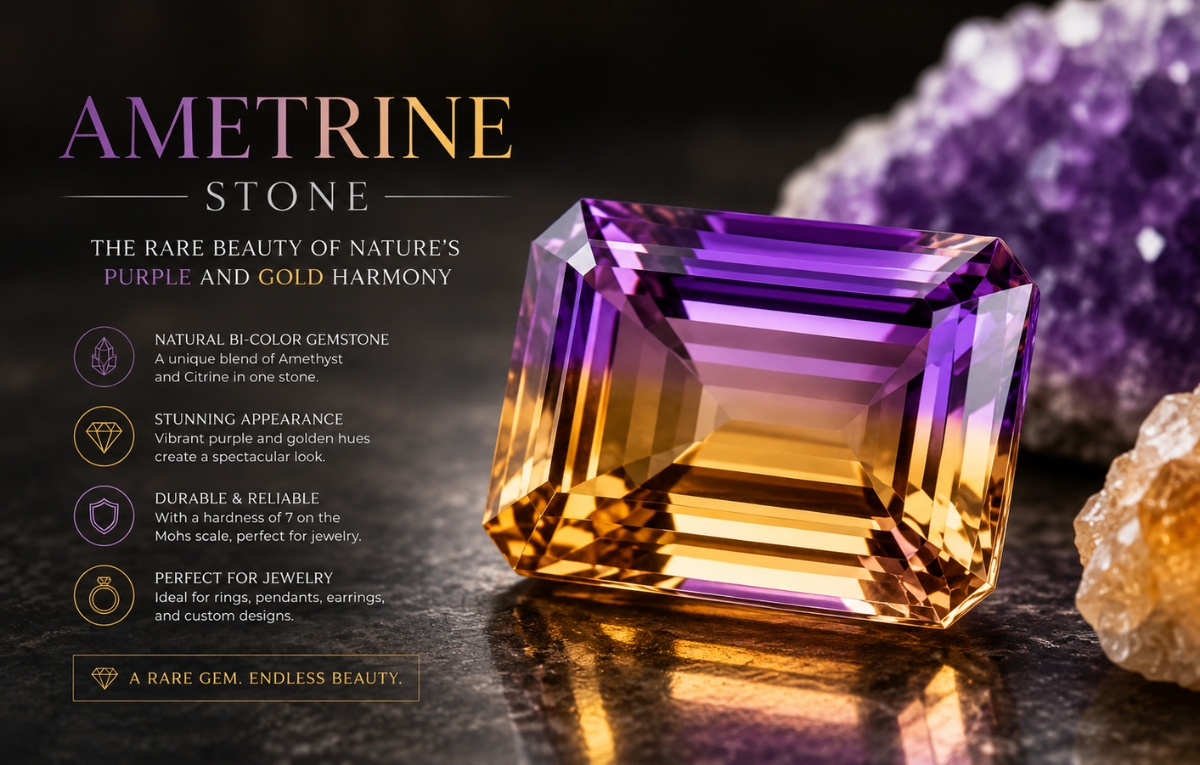
Ametrine stone is a translucent, bicolor variety of quartz that shows the shades of amethyst as well as citrine within the same stone. Its chemical makeup includes silica dioxide (SiO2), which also has a Mohs hardness of 7.
Its most well-known feature is the distinction between violet or purple, as well as orange and yellow. Instead of a uniform hue, the stone has two different color zones. This creates the appearance of a stone that changes significantly based on the cutting and direction.
This characteristic of natural two-tones is among the primary motives why people who love gemstones are drawn to the ametrine stone. There are no two gemstones that show their hues in identical ways, which makes each one feel unique.
The Natural Colors of Ametrine
Color can be the primary visual feature when choosing an ametrine gemstone. Beautiful examples of the stone can display attractive contrast between orange and purple regions, while certain stones show a well-balanced division between these two shades.
Certain types of ametrine stone possess a clear line between the areas of color, while some make a more visual transition. The style that you prefer is based on the individual’s taste as well as the style of jewelry.
The well-balanced distribution of color is particularly attractive because every side of the stone remains visible. Cutters typically consider the natural color zone when considering which way to style the stone.
Where Does Ametrine Come From?
Natural ametrine stone comes with an intriguing story about its historical origins. Based on the Gemological Institute of America, it is believed that the Anahi mine located in Bolivia is the sole commercial producer of Ametrine. It is situated in the southeastern region of Bolivia close to the Brazilian border.
This comparatively small commercial supply is a major reason for the stone’s unique place in the market for colored stones. Anahi is a popular colored stone. Anahi deposit is also linked with natural amethyst as well as citrine. The area is especially important for the quartz types.
If you are a buyer who is interested in knowing more about gemstone sources, requesting documents and an explanation from a trusted seller could give valuable information on the stones to be considered.
How Cut Affects Ametrine’s Appearance
Cutting is a key element in revealing the distinct hues of the ametrine stones. An unplanned cut could hinder the display of one hue, whereas a thoughtfully thought-out design may highlight each of the zones.
Rectangular cut-offs are most commonly related to ametrine stone as they are able to clearly depict the change between its yellow and purple zones. Different designs, like the free-form, mixed, brilliant and even fantasy cuts, are likewise able to produce various visual effects.
If you are choosing an ametrine stone to use in jewellery, it’s important to consider more than form alone. The connection between the cut and the natural color zone could have an impact on the final gem.
Understanding Ametrine Clarity
Clarity is the term used to describe the presence or absence of any visible inclusions in a gem. Ametrine that is faceted to a high standard will be very clear and easy to see, and allows light to pass through the crystal’s transparent surface and improve its appearance.
A stone that has excellent transparency will show greater in terms of brightness and contrast, particularly in the case of cuts that have been created to match the natural properties of the stone.
Clarity should, however, not be taken into consideration separately from color or cut. Buyers should consider the overall look of the stone rather than focus only on a single aspect.
Is Ametrine Stone Durable for Jewelry?
Ametrine stone has a Mohs hardness of seven that gives it excellent durability that can be used with different kinds of jewelry. GIA says that it may be ideal for rings along with other pieces of jewelry if it is handled correctly.
But the term hardness refers to resistance to scratching, but is not a guarantee that a stone cannot be damaged. Rings typically experience greater impacts and contact than pendants or earrings. Therefore, a secure setting and careful handling are essential.
Ametrine should be kept away from hard stones during storage to lower the chance of scratching.
Jewelry Ideas for Ametrine Stone
The striking color combo of ametrine stone is suitable for many different jewellery styles. The larger stones could be an attractive centerpiece for an earring or pendant, as smaller stones may be added to earrings, or in other styles.
Ametrine is particularly effective for jewelry in which light is able to penetrate the stone and reveal the color of its zoning. The setting needs to enhance rather than conceal the gemstone.
To create custom-made jewelry, the design and orientation of the Ametrine is able to be altered in order to highlight the area of the crystal, offering an attractive harmony of yellow and purple.
How to Care for Ametrine Stone
A proper care routine can preserve the beauty of ametrine stones over many years. GIA suggests soapy, warm water for a safe and effective cleaning technique. Steam cleaning is not advised, as the stone is not recommended to be exposed to high temperatures.
Rapid temperature fluctuations can cause stress in the stone. In addition, long-term exposure to light sources can cause a change in certain colors of ametrine. This is why gentle handling and proper storage are essential.
If not in use when not in use, store ametrine jewelry inside a soft container in a safe place away from harder gemstones, and do not expose it to chemicals that are harsh.
What Should You Look for When Buying Ametrine?
- If you are buying an ametrine gemstone from the United States, consider the total combination of color, clarity, cut, carat weight, and clarity instead of judging the stone solely by its size.
- Color splits that are visually appealing are usually the first thing buyers will notice. The split should make each color zone easy to notice, while transparent stones can increase the shine of the gem.
- It’s also worthwhile to inquire about information on treatments, the origin of the stone, as well as the exact stone’s specifications. GIA says that ametrine can be not treated often, but fractures filled with filler can happen.
- When you purchase from a reputable stone dealer will help you know what you’re buying as well as get the most accurate details about the stones.
Why Choose Ametrine for Your Collection?
Ametrine provides something unique, unlike traditional single-colored gemstones. Instead of deciding between the violet appearance of amethyst or the gold appearance that is associated with citrine, this unique quartz type has both colors in one stone.
The distinctive design, the low commercial supply, excellent quality and durability, as well as a wide array of cut options, make it an appealing option for jewellery enthusiasts as well as gem collectors.
If you’re looking for something that’s different from the usual options, an ametrine that is well-chosen could provide a distinctive blend of character and color.
Frequently Asked Questions About Ametrine Stone
What is an Ametrine Stone?
Ametrine is a bicolor type of quartz, which shows shades of yellow and orange in the same stone. It’s also referred to as amethyst-citrine.
What is the natural source of ametrine?
The Anahi mine located in Bolivia is recognized currently as such by GIA as the primary natural source for ametrine that is used in commercial production.
Does ametrine make a great gemstone for ring making?
Yes. With a Mohs hardness of 7, ametrine can be utilized as a ring material, but it must be shielded from scratches, hard impact, sudden temperature fluctuations, and abrasive handling.
What color should a great Ametrine be?
Desirable Ametrine typically shows beautiful shades of violetish or purple as well as yellow-to-orange regions. The ideal balance is an individual choice.
What is the best way to clean ametrine?
A warm and soapy bath is an effective method of cleaning Ametrine. Beware of steam cleaning as well as overheated temperatures, and work with the stone with care during cleaning.
Final Thoughts
The Ametrine stone is distinctive for its unique mix of gold-yellow and purple hues. The quartz component gives it durability and practicality, while its unique color zoning offers an individuality gem collectors and buyers of jewelry often look for.
If choosing an ametrine, be aware of the connection to cut, color, transparency, clarity, and the overall look. The stone you choose carefully could be a striking design element for rings, pendants, earrings, or even a customized jewellery concept.
For those who are buying and reside in the United States, purchasing from an established source for ametrine stone and knowing the stones’ characteristics could make the process more straightforward and ensure the stone you choose is compatible with your style preferences as well as your jewelry needs.