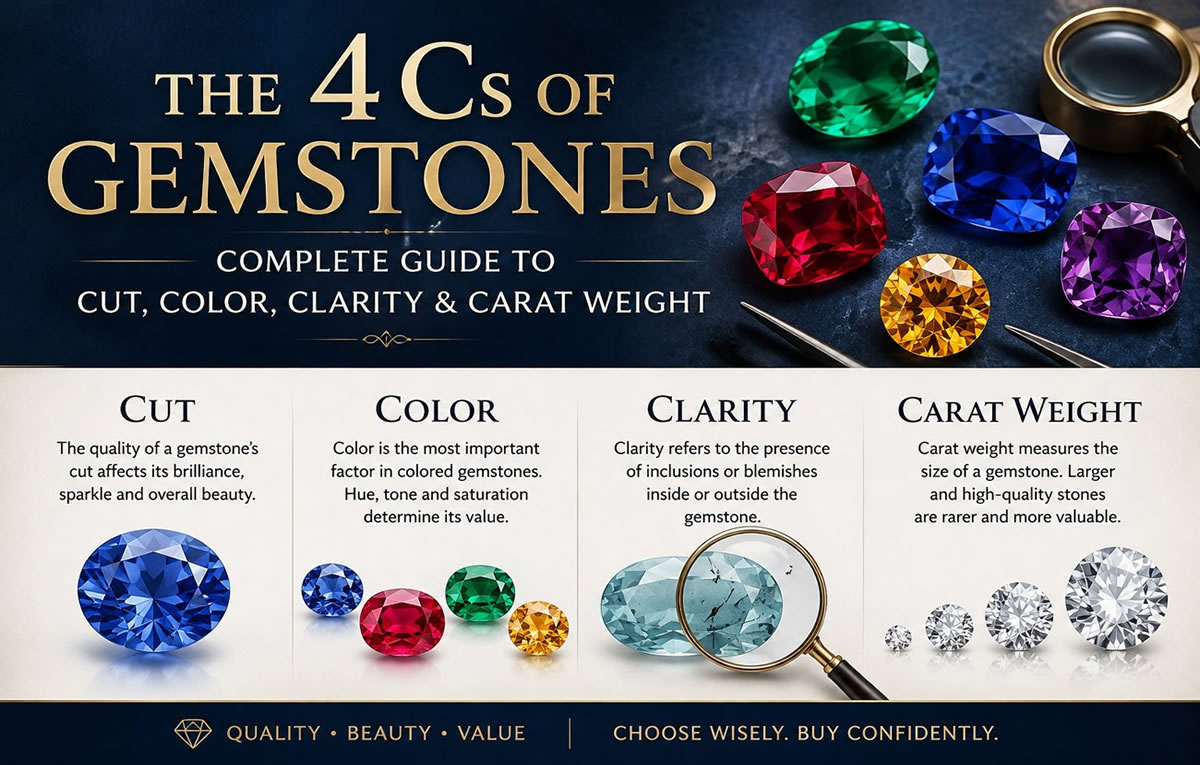
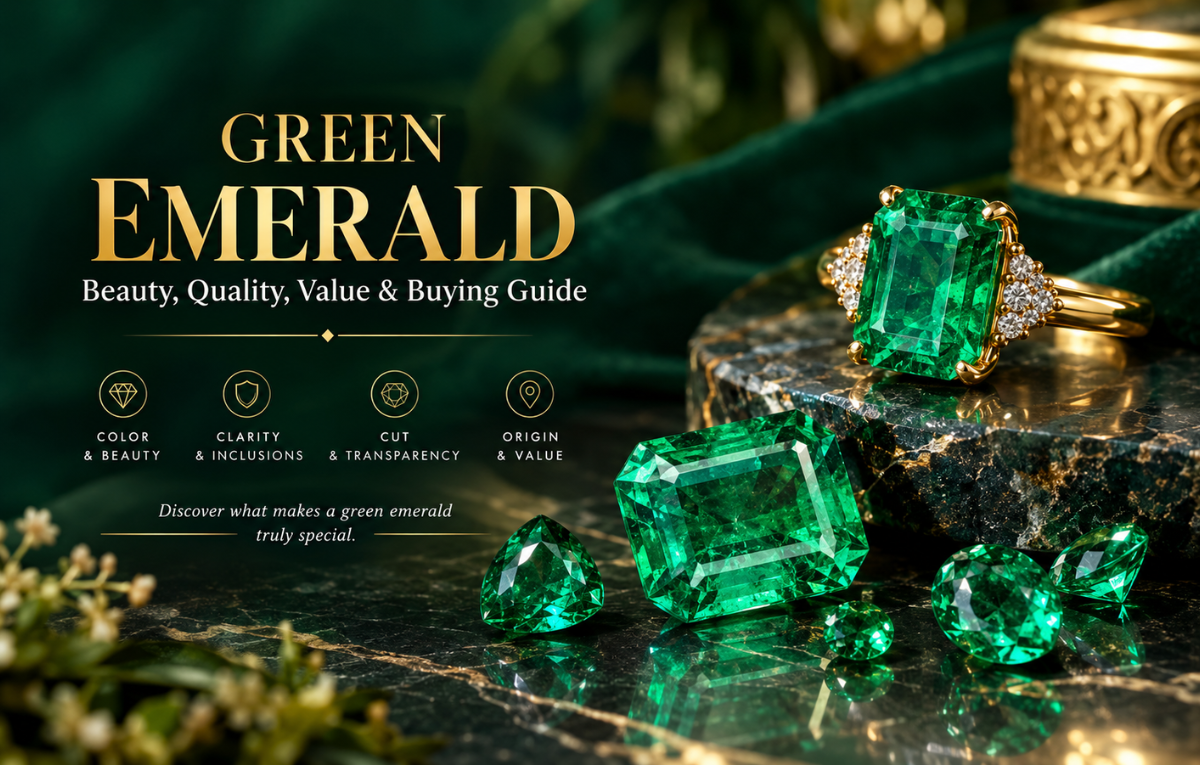
When purchasing natural gemstones, understanding the 4 Cs of gemstones is essential for making informed decisions. Whether you are buying gemstones for jewelry, collecting rare stones, or investing in precious gems, the 4 Cs help determine the quality, beauty, and value of a gemstone.
At Imperial Gemstone, we believe educated buyers make better choices. This complete guide explains everything you need to know about the 4 Cs: Cut, Color, Clarity, and Carat Weight.
What Are the 4 Cs of Gemstones?
The term “4 Cs” refers to the four primary factors used to evaluate gemstone quality and value:
- Cut
- Color
- Clarity
- Carat Weight
These characteristics play a major role in determining a gemstone’s appearance, rarity, brilliance, and price.
The 4 Cs are commonly used for diamonds but are also extremely important when evaluating colored gemstones such as sapphires, emeralds, rubies, tourmalines, aquamarine, and many other precious and semi-precious stones.
1. Cut – The Beauty & Sparkle of a Gemstone
The cut of a gemstone refers to how well the stone has been shaped and faceted. A high-quality cut enhances brilliance, sparkle, symmetry, and overall visual appeal.
Unlike diamond grading, colored gemstone cutting focuses not only on brilliance but also on maximizing color and preserving weight.
Why Gemstone Cut Matters
A well-cut gemstone:
- Reflects light beautifully
- Enhances sparkle and brilliance
- Improves symmetry and appearance
- Increases overall value
Poorly cut gemstones may appear:
- Dark or lifeless
- Uneven
- Less brilliant
- Smaller than their actual weight
Popular Gemstone Cuts
Some of the most popular gemstone cuts include:
- Oval Cut
- Cushion Cut
- Emerald Cut
- Pear Cut
- Round Cut
- Princess Cut
- Cabochon Cut
Different gemstone types respond differently to various cutting styles depending on crystal structure, transparency, and color distribution.
Precision Cutting in Colored Gemstones
In gemstones such as sapphires and tourmalines, cutters often prioritize color saturation over maximum brilliance. This is why some colored gemstones may have deeper cuts to improve color intensity.
2. Color – The Most Important Factor in Colored Gemstones
For many colored gemstones, color is the most valuable characteristic.
The beauty and rarity of gemstones are heavily influenced by:
Understanding Gemstone Color
Hue
Hue refers to the primary gemstone color, such as:
- Blue
- Red
- Green
- Yellow
- Pink
Tone
Tone describes how light or dark the gemstone appears.
Saturation
Saturation measures the intensity or richness of the color.
Highly saturated gemstones with vivid color are usually more valuable than pale or dull stones.
Famous Gemstone Colors
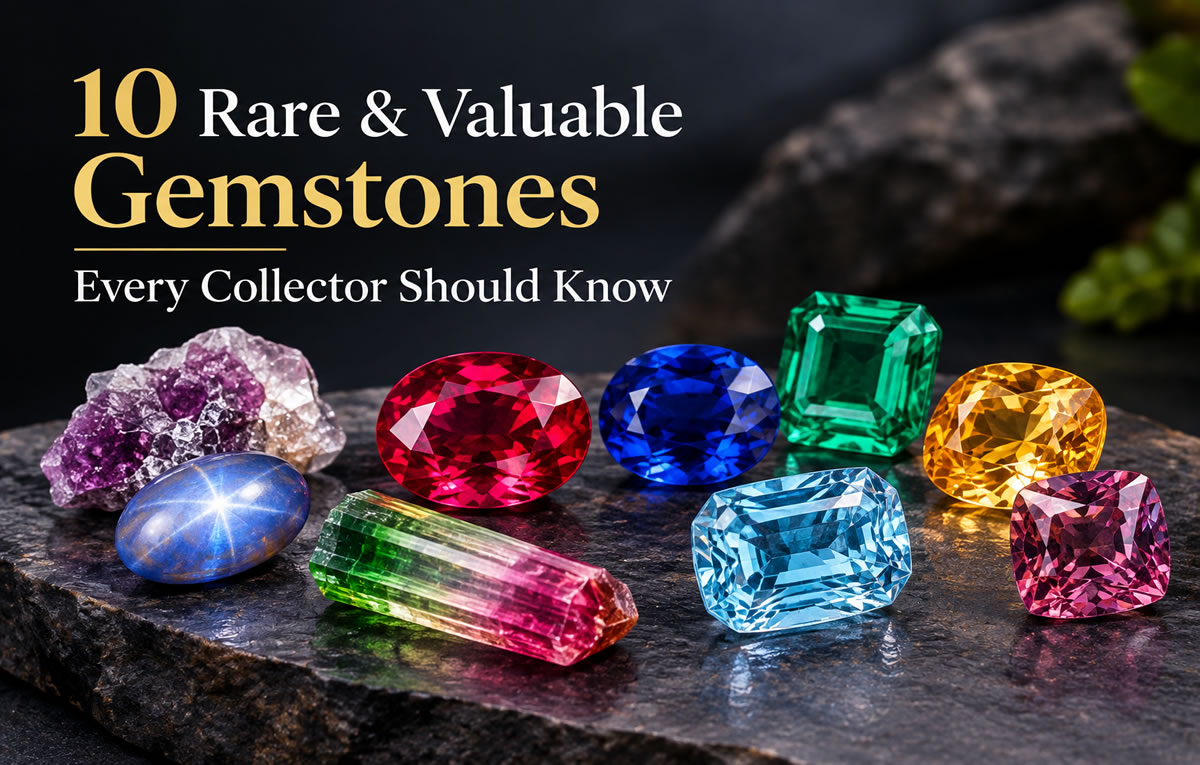
Some of the world’s most desirable gemstone colors include:
- Royal Blue Sapphire
- Pigeon Blood Ruby
- Vivid Green Emerald
- Neon Blue Paraiba Tourmaline
- Kashmir Sapphire Blue
- Santa Maria Aquamarine
Collectors and jewelry buyers often search specifically for these premium color varieties.
Color Zoning in Gemstones (4 cs of gemstones)
Natural gemstones may sometimes show uneven color distribution called “color zoning.” Skilled cutting can minimize visible zoning and improve overall appearance.
3. Clarity – Natural Inclusions Inside Gemstones
Clarity refers to the presence of internal inclusions or external blemishes within a gemstone.
Because gemstones form naturally underground, most stones contain some level of inclusions.
What Are Gemstone Inclusions?
Inclusions are natural internal characteristics such as:
- Mineral crystals
- Fractures
- Needles
- Liquid pockets
- Growth patterns
Some inclusions can actually help identify a gemstone’s natural origin.
Clarity and Gemstone Value
Generally:
- Fewer visible inclusions = higher value
- Better transparency = greater brilliance
However, clarity expectations vary by gemstone type.
For example:
- Emeralds commonly contain inclusions
- Aquamarine is usually cleaner
- Rubies often contain silk inclusions
- Tourmalines may have visible internal features
Eye-Clean Gemstones
An “eye-clean” gemstone appears free of visible inclusions to the naked eye. Eye-clean stones are usually more desirable for jewelry use.
4. Carat Weight – Measuring Gemstone Size
Carat weight measures the weight of a gemstone.
1 carat = 0.2 grams
Larger gemstones are generally rarer and more valuable, especially when combined with excellent color, clarity, and cut.
Carat Weight vs Gemstone Size
Different gemstone materials have different densities, meaning two gemstones of equal carat weight may appear different in size.
For example:
- A 1-carat sapphire may appear smaller than a 1-carat diamond
- Dense gemstones weigh more for their size
Large High-Quality Gemstones Are Rare
As gemstone size increases, high-quality material becomes increasingly rare.
Large gemstones with:
- Strong color
- Good clarity
- Precision cut
- High transparency
can command premium prices in the gemstone market.
Which of the 4 Cs Is Most Important?
The importance of each “C” depends on the gemstone type and buyer preference.
For Colored Gemstones
Color is usually the most important factor.
For Diamonds
Cut quality often has the greatest effect on brilliance.
For Collectors
Rarity and unique characteristics may matter more than perfect clarity.
For Jewelry
Balance between all four factors is ideal.
How the 4 Cs Affect Gemstone Prices
Gemstone prices are determined by the combination of all four quality factors.
A gemstone with:
- Excellent color
- Good clarity
- Precision cutting
- Larger carat weight
will generally be significantly more valuable.
However, rarity, origin, treatments, and market demand also influence pricing.
Natural vs Treated Gemstones
Some gemstones undergo treatments to improve:
Common treatments include:
- Heat treatment
- Fracture filling
- Oil treatment
- Irradiation
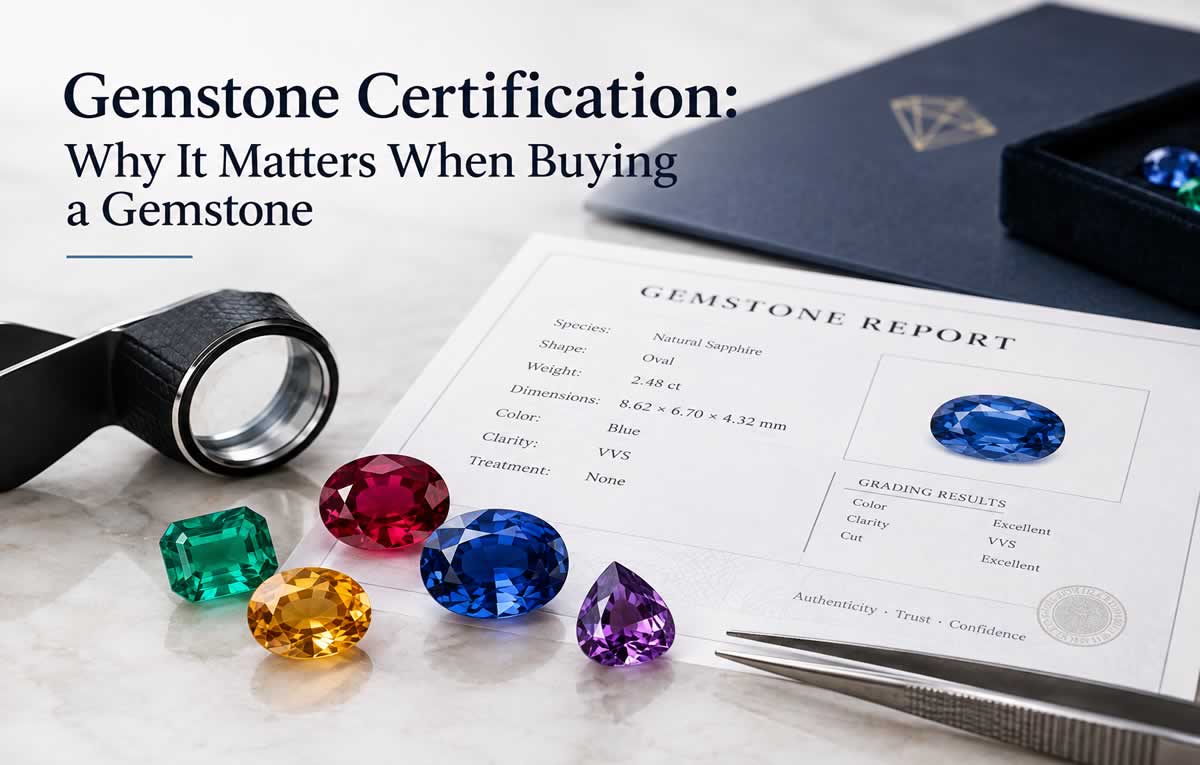
Always purchase gemstones from trusted sellers who clearly disclose any treatments.
At Imperial Gemstone, transparency and honest representation are important parts of our business.
Tips for Buying Quality Gemstones
When purchasing gemstones online, consider the following:
1. Focus on Color First
For colored gemstones, prioritize vibrant and attractive color.
2. Choose a Good Cut
A well-cut gemstone will look brighter and more beautiful.
3. Understand Natural Inclusions
Natural inclusions are common and can confirm authenticity.
4. Buy from Trusted Sellers
Choose reputable gemstone dealers with clear product descriptions and accurate images.
5. Ask About Treatments
Always ask whether a gemstone has been treated or enhanced.
Why Understanding the 4 Cs Matters
Learning about the 4 Cs helps buyers:
- Make informed decisions
- Avoid overpaying
- Understand gemstone quality
- Compare gemstones confidently
- Choose better jewelry stones
- Build valuable collections
Whether you are purchasing a sapphire ring, ruby pendant, emerald jewelry piece, or collector mineral specimen, understanding gemstone quality is essential.
Final Thoughts
The 4 Cs of gemstones — Cut, Color, Clarity, and Carat Weight — are the foundation of gemstone evaluation. Understanding these factors helps buyers appreciate the beauty, rarity, and value of natural gemstones.
Every gemstone is unique, and the perfect balance of the 4 Cs depends on personal preference, intended use, and budget.
At Imperial Gemstone, we are passionate about providing authentic gemstones, fine jewelry, and premium mineral specimens while helping customers make confident and informed purchasing decisions.