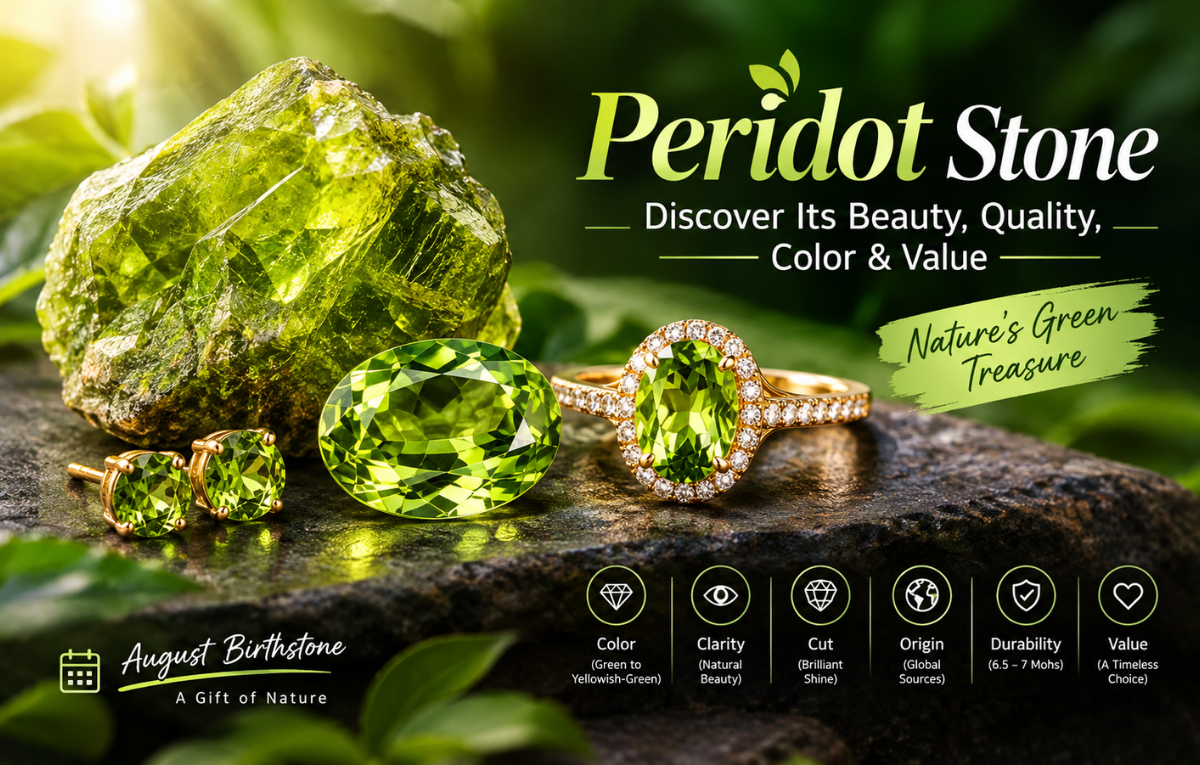
Peridot Stone is a stunning, natural green gemstone with a lovely fresh yellowish-green hue. Peridot comes in many shades of green – distinguishing it from the myriad colored gemstones. Its good looks, its natural coloring, the fact that it is quite affordable, and the high number of years of use by people make it popular in the eyes of jewelry lovers and gemstone collectors.
Peridot is also of geological interest. It’s one of the gem forms of the mineral olivine and may be created deep within the Earth’s mantle. This gemstone is rare and has even been found in meteorites.
What Is a Peridot Stone?
The gem-quality variety of the mineral, for which magnesium and iron silicates are the main chemical components, is called a Peridot Stone. It is naturally green to greenish green/gt; and greenish yellow. Its colour intensity is dependent on iron in its structure.
Peridot’s color is not a mix of trace impurities as it is in the case of gemstones, but rather an intrinsic feature of the mineral itself. When it comes to fine peridot, it can appear quite vibrant and bright with green hues and color that seem to excel under warm lighting.
The hardness of peridotite is approximately 6.5 to 7, which means it is suitable for most forms of jewellery but harder than more common gemstones like sapphire or diamond and needs more care.
What Is The Special Thing About Peridot Stone?
The most appealing feature of a Peridot Stone is its unique color of greenness. Peridot typically has a brighter yellow-green colour, although emerald can show a much wider spectrum of greens as well.
In some cases, fine peridot can be vibrant and vibrant-looking, especially if it possesses intense saturation and clarity. It’s versatile and pairs well with various metals, whether you prefer warm tones or cool ones, so there are a lot of possibilities for jewellery design with it.
Peridot is also of historic interest. The gemstone was mined by the ancient Egyptians on Zabargad Island in the Red Sea, and was called by Egyptians as the “gem of the sun.”
Peridot Stone Color
One of the most crucial aspects to consider is the color of a Peridot Stone. The premium examples are most likely of a pure green color and free of brown and too-yellow hues.
There is a range of color in most commercial peridot, and the rarest and most desirable material can range from a rich grass green hue. GIA says that the best, or brightest, colors are in the larger stones, especially those in the 10 carat and above size range.
How you light up the gemstone is the first key lookout that you should take while selecting peridot. When setting in a well-colored stone, the color should be maintained as a pleasing color instead of too light or brown.
Peridot Stone Is Transparent
Clearness is also a crucial aspect of a good Peridot Stone. In the best inclusions of peridot do not appear to be seen without a magnifier.
A peculiar inclusion in some peridot is called a ‘lily pad ‘. Such inclusions have a disk shape and reflect light in the fracture. Dark inclusions, particularly dark patches seen with the naked eye, are more likely to take away from the aesthetic and value of the gemstone if they are significant and not noticeable.
A clean stone that has good colour and transparency may look much more brilliant and appealing.
Where Does Peridot Come From?
Peridot has been discovered in at least a few regions around the world. Myanmar, Pakistan, and China are significant sources, along with the United States and Vietnam. The peridot stone is historically known to be found on the Zabargad Island of Egypt, but is now not a significant commercial source.
Pakistan is of particular interest because there are a few patches of excellent peridot, which include material from the Himalayas. GIA is a source identification handbook that highlights some of the best strongly colored peridot from Pakistan and Myanmar.
Peridot may be found in meteorites as well. Examples of extraterrestrials of this type are extremely rare and mostly of scientific or collector’s interest.
The Block Of Peridot Stone Will Be Cut
Many different shapes and styles can be made from a single block of Peridot Stone. Frequently popular shapes are round, oval, pear, cushion, emerald, triangular, and marquise.
The grade is important, as it relates to the effectiveness of the gem’s ability to reflect light. A great peridot can look bright, more vibrant, and more interesting when it is cut well.
Peridot cabochons, beads, carvings, and odd cuts are also made from peridot. The best method of cutting depends upon the nature of the rough and the desired qualities that the cutter desires to accentuate.
Peridot Stone In Jewelry
- Peridot lends itself to a variety of designs and can be considered for numerous items. It is frequently used in rings, earrings, pendants, necklaces, bracelets, and decorative gemstones.
- Peridot’s vivid green hue makes it an attractive stone in yellow gold. The high-quality stones can be paired with white gold and platinum-colored settings, too.
- There are plenty of ways to wear peridot jewelry for a casual look as well as for special occasions. Earrings and pendants come in handy because they tend to make the least impact compared to rings.
- The value of a peridot stone depends on its colour and shape. The value of a peridot stone depends on the colour and shape of the stone.
- There are a number of factors that can impact not only the monetary value of a Peridot Stone but also the level of desirability.
Color
The toughness and color of these greens (usually color, intensity, and shape) will generally be stronger and more saturated rather than being light or brown.
Clarity
Generally, stones that are eye-clean and have excellent transparency are more appealing.
Cut
The properly executed cut will enhance brightness, brilliance, and thus appearance.
Size
Peridot that is a large drop of color can be quite significantly more valuable and collectible than smaller peridot, for the industry. Typically, bigger stones cost more, and this trend becomes more pronounced at stones above about 10 x 8 mm, states GIA.
Overall Beauty
All in all, color, clarity, cut, size, and appearance are what make a gemstone attractive. So a more colourful or acceptably coloured but smaller cut stone can be more attractive than a bigger stone that is less colourful and has more inclusions.
Is Peridot A Treated Stone?
Peridot doesn’t tend to be treated regularly to brighten up its appearance. Peridot is rarely treated, but could have fractures filled, observes GIA.
Always make sure that you ask for a substantial amount of information about any treatment and enhancements that can be put in place, especially when it comes to assuring that you are getting the right gemstone for a valuable collectible.
Peridot Stone Is A Stone That Needs Tenderness
When dealing with a Peridot Stone, reasonable care should be used because it tends to be softer than many of the popular jewellery gemstones.
Use warm, soapy water for general cleaning in all cases. GIA does not recommend the use of ultrasonic / steam cleaning on peridot. This can be caused by sudden or unequal exposure to heat, as well.
Also, when you store peridot jewelry, make sure that you keep each piece stored away from hard gemstones, as it might be scratched. Peridot jewelry is also best removed prior to activities that may lead to strong impacts and/or harsh materials.
Why Opt For A Peridot Stone?
A Peridot Stone is a great choice for a buyer seeking a naturally green gemstone that looks out of this world and isn’t expensive.
The green color is natural color, it has a good history, great geological origin, and it comes in many sizes and cuts – great for jewelry lovers and collectors.
You can use it for drab everyday jewelry as a bright yellowish-green or use it for a big, vivid stone for your collection. Depending on your taste, peridot could be the stone you’re looking for, as it’s a different type of stone than the ones you’re used to seeing around a lot!
Final Thoughts
The Peridot Stone is a natural stone that is both beautiful and has a unique geological and historical background. This gemstone’s vibrant hues and distinctive qualities have kept it a delight to wear, from ancient Egyptian treasures to today’s jewelry collections.
When purchasing peridot, be sure to consider its color, clarity, cut, size, and aesthetic appeal. A stone that is well-shaped, has a good amount of green colour, and has good clarity can make a big difference in the beauty of the stone.