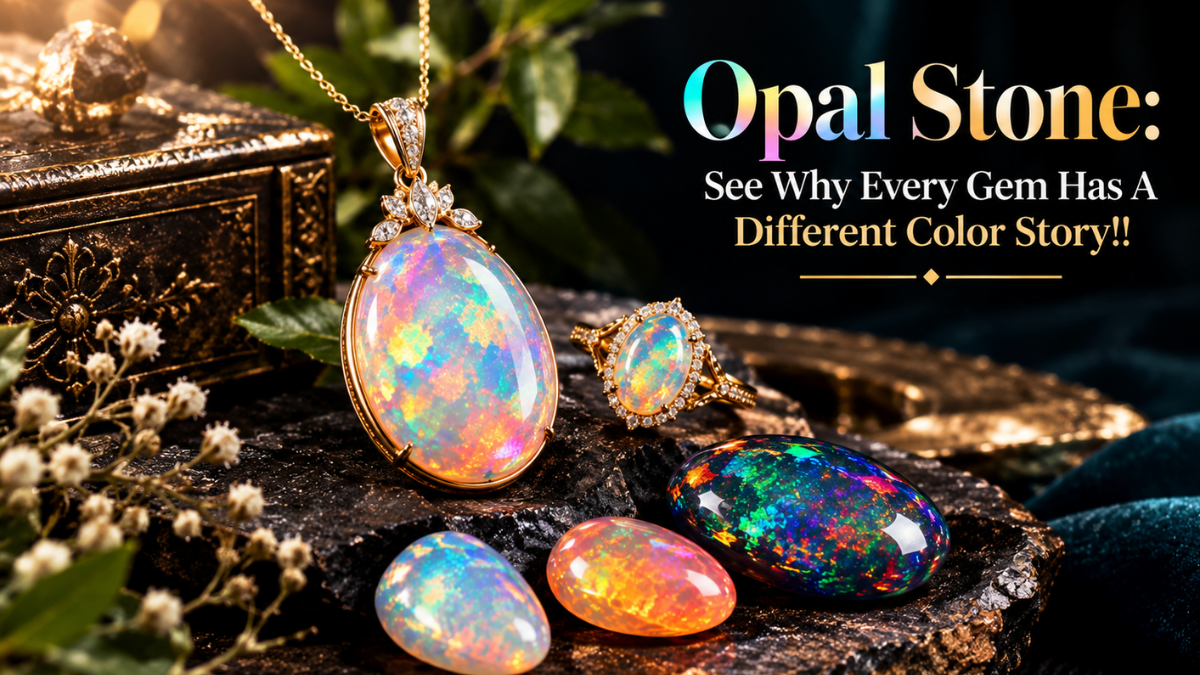
An opal stone doesn’t really look like anything else. Instead of settling on one fixed color, it flashes blue, green, yellow, orange, pink, even red as you move it under light. That shifting quality gives opal its whole identity, honestly. It’s why jewelry buyers, collectors, and anyone a little tired of the usual gemstones keep coming back to it.
From classic white opal stone to dramatic black opal to bright, fiery orange opal, there’s more variety here than most people expect going in. But picking the right one isn’t just about chasing the brightest colors you can find. Body tone, play-of-color, pattern, clarity, size, origin, treatment history, overall condition- all of it changes how the stone looks and what it ends up being worth.
What Is An Opal Stone?
Opal stone is, technically, a hydrated and amorphous form of silica. Unlike most crystalline gemstones, it has no real crystal structure at all. What it does have is microscopic silica spheres mixed with water. How those spheres arrange themselves is what creates that famous optical effect people call play-of-color.
This is really the whole magic of opal stone, if you think about it. Light hits that internal structure, and depending on the angle you’re looking from, different wavelengths become visible. One angle might give you flashes of blue and green. Turn it slightly, and you’re suddenly looking at orange or red.
Types Of Opal Worth Knowing
Opal splits into several distinct varieties. Each one has its own visual personality and its own pull for collectors.
Black Opal
Known mainly for its dark body tone, which makes the play-of-color pop against the background in a way lighter opal stones just can’t pull off. Bright flashes look genuinely dramatic here. High-quality black opal stone, strong patterns, vivid color play, good overall look tend to be some of the most sought-after pieces among collectors, and it’s not hard to see why.
White Opal
Light or milky in body tone. Probably the variety most people run into first, actually. Play-of-color here can range from subtle little flashes to something that covers most of the stone’s surface. Works beautifully in rings, pendants, earrings, pretty much anywhere you’d want to put it.
Fire Opal
Warm-toned. Yellow, orange, reddish-orange- that’s the usual range. Some fire opal stone show play-of-color, others are valued mainly for that strong, clear body color on its own, no flash needed. That energetic look makes it a natural fit for more contemporary jewelry designs.
Boulder Opal
This one forms attached to, or within, its natural host rock. Pieces often come in irregular shapes, combining colorful opal stone with darker ironstone in a way that looks almost accidental, in a good way, though. Since every single specimen ends up with its own natural pattern, boulder opal stone appeals a lot to collectors who want something nobody else has.
Crystal Opal
Transparent or translucent enough that you can actually see both body color and internal play-of-color at once. Depending on the piece, this creates real depth, almost like looking into the stone instead of just at it. That mix of transparency and shifting color is what makes crystal opal stone genuinely interesting, both for jewelry and for serious collections.
What Actually Gives Opal Its Color?
Comes down to two things, really: internal structure and body tone. The microscopic silica arrangement interacts with light and produces those familiar color flashes. Size and spacing of the silica spheres decide which wavelengths end up visible, which is why one opal stone leans blue and green while another throws intense orange or red. It’s mostly just physics playing out a little differently stone to stone.
Body tone matters too. A dark opal stone makes bright colors stand out more. A white or lighter opal gives you something softer, more muted overall.
How To Judge Opal Quality
No single factor makes an opal stone good or bad on its own. You really have to look at the whole picture here.
Play-of-Color: Strong, attractive flashes matter a lot more when they cover a decent chunk of the stone, not just a corner of it.
Pattern: Ranges from broad flashes to pinfire, patches, rolling color, and more. A distinctive pattern is really what makes one opal stone stick in your memory over another.
Body Tone: Black, dark, white, transparent, each one gives off a completely different feel. Which is “better” mostly comes down to personal taste, plus the variety itself.
Brightness: A lively opal stone looks nothing like one with faint, washed-out flashes. Big difference, actually.
Condition: Cracks, chips, crazing, any damage at all hurts both the look and how usable the stone is. Worth inspecting carefully before spending real money.
Opal Stone For Jewelry
Opal brings a genuinely colorful focal point to a lot of jewelry styles. Its shifting look makes it especially good for pieces meant to be seen from more than one angle.
Rings can turn an opal stone into a real artistic statement. Pendants let bigger stones shine without exposing them to the kind of daily contact a ring deals with. Earrings work well too, with smaller opals, whether the setting’s simple or more elaborate.
One thing worth keeping in mind is that opal stones are softer than stones like sapphire or ruby. So design and intended use matter more here than with most gems. A protective setting genuinely helps if the piece is going into regular wear.
Natural, Treated, And Synthetic Opal
Natural opals form geologically, and they can vary a lot in appearance. Some get treated to improve color or other visual traits. Synthetic or lab-created opal stones go through controlled processes and can end up looking a lot like the real thing, close enough to fool a casual glance. Then there are imitations, made from completely different materials that just mimic opal’s look.
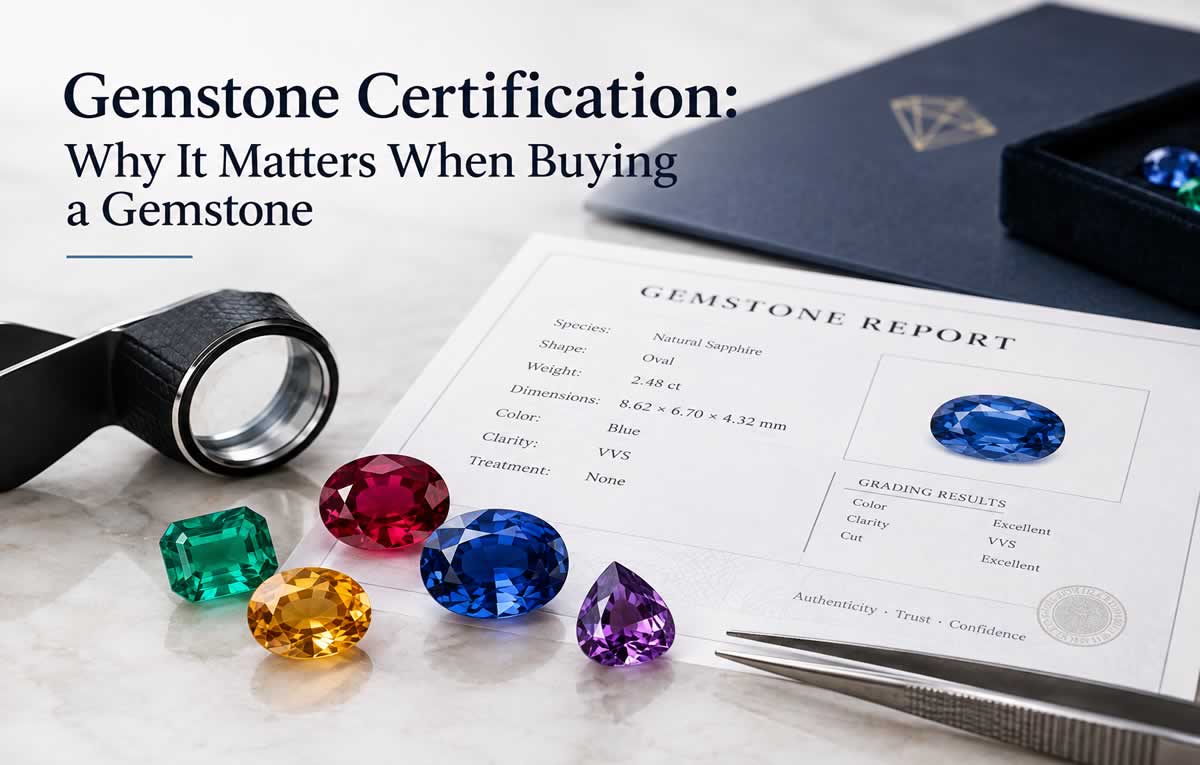
For anything valuable, just ask directly: natural, treated, synthetic, or imitation, and request documentation where it’s available.
Buying Opal Stone In The USA
Start by figuring out what you actually want from the stone. A collector usually cares about rarity, unusual patterns, origin, or natural condition. A jewelry buyer’s more focused on color, shape, durability, and how well it’ll sit in a setting.
Always look at it under proper lighting, and check it from a few angles if you can. Ask about treatments. Get a gemological report for anything higher-value, it’s worth the extra step. It also helps to compare several stones rather than just grabbing the first attractive one you see, since small differences in color intensity, pattern, transparency, and condition can add up to a pretty big difference in the end.
Caring For An Opal Stone
Opal needs more careful handling than a lot of harder gemstones do. Keep it away from harsh chemicals, strong impacts, and sudden environmental changes wherever you can manage it.
For cleaning, stick to gentle methods suited to that specific stone. A soft cloth and careful handling beat anything aggressive, every time. Don’t experiment with harsh chemicals or abrasive materials, just don’t, it’s not worth the risk. When storing opal jewelry, keep it separate from harder gemstones. Cuts the risk of scratches down significantly.
Why Opal Remains A Favorite Among Collectors
A lot of opal’s appeal really comes down to individuality. Even stones from the same broad variety can show completely different colors, patterns, and effects. No two are quite alike, which is sort of the whole point.
Some buyers love it specifically because it offers something softer, more artistic than the usual transparent gemstones. Collectors, meanwhile, tend to chase unusual patterns, exceptional play-of-color, natural specimens, or material from specific, notable locations. Whether it ends up in a piece of jewelry or sitting in a collection, opal offers a mix of color and character that’s genuinely hard to find anywhere else.
Final Thoughts
An opal is a lot more than just a colorful stone. Its shifting play-of-color, wide range of varieties, and one-of-a-kind patterns give every good specimen its own personality.
From black and white opal through fire, boulder, and crystal varieties, there’s something here for pretty much every taste and collecting goal. Understanding color, pattern, body tone, condition, treatment, and durability is really what helps buyers make a smarter choice in the end.
For anyone exploring gemstones in the USA, opalite is genuinely worth considering, especially if beauty, individuality, and visual character matter to you just as much as the traditional gemstone appeal does.