How to Care for Natural Gemstones: Cleaning, Storage, and Maintenance Tips
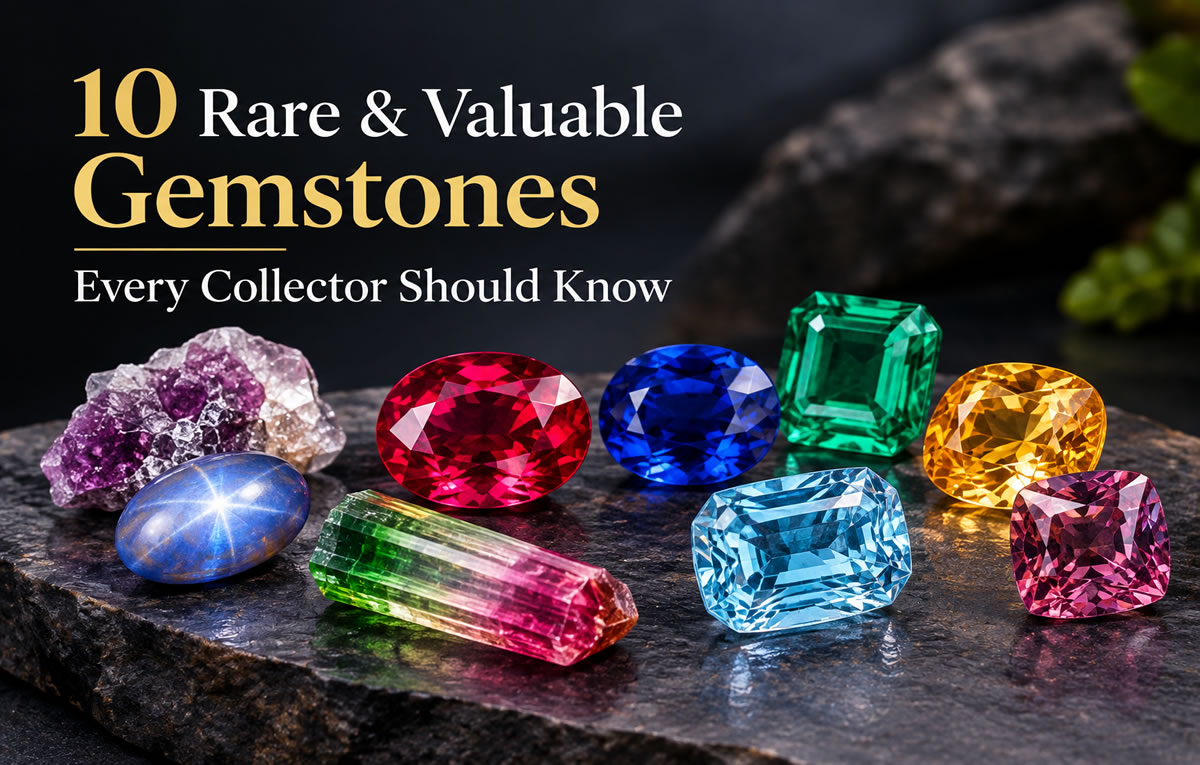
Natural gemstones are among nature’s most extraordinary creations. Formed deep within the earth over millions of years, gemstones such as sapphires, emeralds, rubies, aquamarines, garnets, topaz, tourmalines, opals, quartz, and many others are admired for their beauty, rarity, and value. Whether you own a loose gemstone for collecting or a precious gemstone set in jewelry, proper care is essential to preserve its brilliance and longevity.
Although many gemstones are highly durable, they are not indestructible. Dust, oils, cosmetics, chemicals, impacts, and improper storage can gradually reduce their sparkle or even cause damage. Fortunately, caring for natural gemstones is simple when you understand the correct cleaning methods and maintenance practices.
In this comprehensive guide by Imperial Gemstone, you’ll learn how to clean, store, protect, and maintain your gemstone collection so it remains beautiful for generations.
Why Proper Gemstone Care Is Important
Every natural gemstone has unique physical properties. Some gemstones, such as sapphire and ruby, are extremely hard and resistant to scratches, while others, including opal and fluorite, require much gentler handling.
Proper care helps to:
Maintain natural brilliance
Prevent scratches and chips
Preserve gemstone value
Extend the life of jewelry
Protect gemstone settings
Keep certifications and resale value intact
Taking a few minutes to care for your gemstones can significantly increase their lifespan.
Understanding Gemstone Hardness
Before cleaning any gemstone, it’s important to understand its hardness. Hardness is measured using the Mohs Scale.
Gemstone
Mohs Hardness
Diamond
10
Sapphire
9
Ruby
9
Topaz
8
Aquamarine
7.5–8
Tourmaline
7–7.5
Quartz
7
Garnet
6.5–7.5
Fluorite
4
Opal
5.5–6.5
Harder gemstones resist scratches better, but softer stones require extra care during cleaning and storage.
How to Clean Natural Gemstones Safely
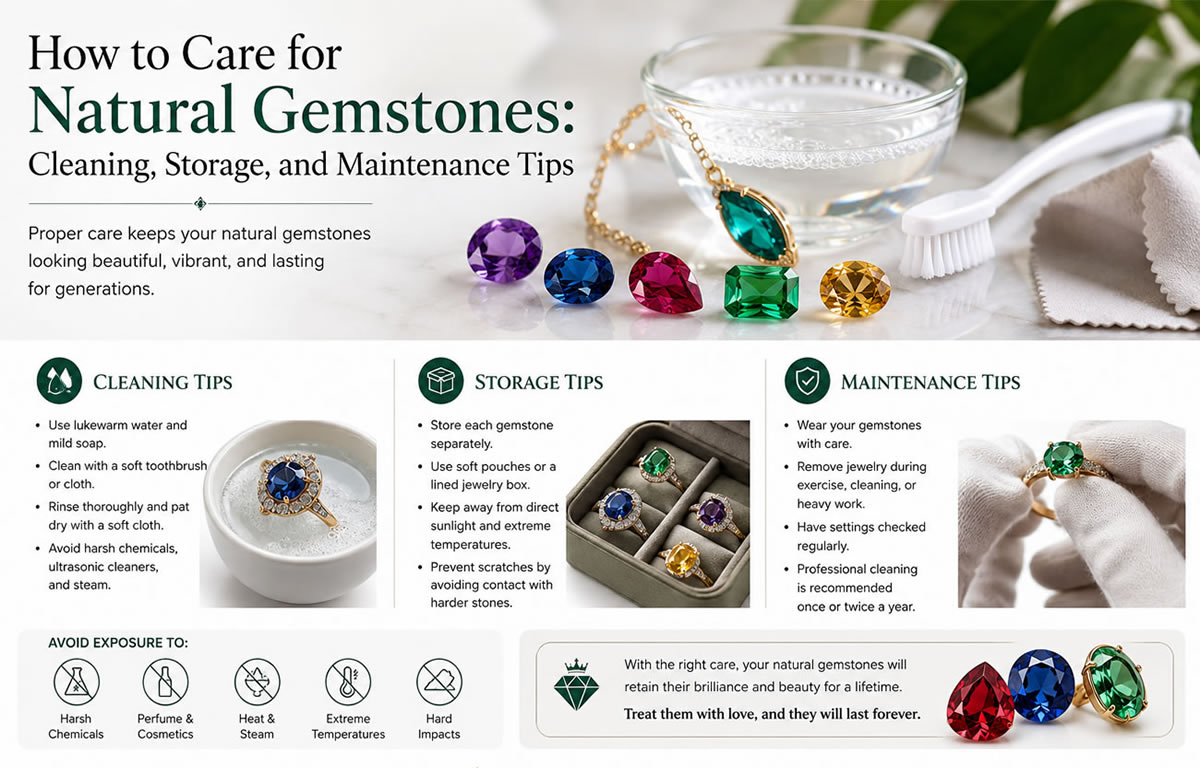
Cleaning gemstones regularly removes dirt, skin oils, and everyday residue that can dull their appearance.
Mild Soap and Warm Water
This is the safest method for most gemstones.
You’ll Need:
Lukewarm water
Mild dish soap
Soft toothbrush
Microfiber cloth
Steps
Fill a small bowl with warm water.
Add a few drops of mild soap.
Soak the gemstone for several minutes.
Gently brush behind the stone and around the setting.
If your gemstone contains fractures or inclusions, avoid ultrasonic cleaning entirely.
Steam Cleaning
Professional steam cleaning is suitable only for certain durable gemstones.
Avoid steam cleaning:
Opals
Emeralds
Fluorite
Amber
Tanzanite
Rapid temperature changes can cause cracking.
Proper Storage of Natural Gemstones
Correct storage is just as important as cleaning.
Store Separately
Gemstones should never rub against one another.
Store each gemstone:
In individual soft pouches
In separate jewelry boxes
In divided storage trays
This prevents scratches.
Keep Away from Sunlight
Extended sunlight can fade certain gemstones.
Sensitive gemstones include:
Amethyst
Fluorite
Kunzite
Topaz (some colors)
Store them in cool, dark places whenever possible.
Control Humidity
Some gemstones react to very dry conditions.
Opals especially benefit from moderate humidity.
Avoid storing gemstones near:
Heaters
Fireplaces
Air vents
Remove Jewelry During Certain Activities
Even durable gemstones should not be worn during activities that expose them to impact or chemicals.
Remove gemstone jewelry before:
Swimming
Gardening
Exercising
Heavy lifting
Cleaning the house
Applying perfume
Using hairspray
Applying lotion
These simple habits greatly reduce unnecessary wear.
Special Care for Popular Gemstones
Sapphire
Sapphires are among the hardest gemstones.
Cleaning:
Mild soap
Warm water
Soft brush
Very durable for everyday wear.
Ruby
Ruby care is nearly identical to sapphire.
Avoid harsh impacts even though rubies are extremely hard.
Emerald
Emeralds often contain natural inclusions.
Use:
Mild soap
Soft cloth
Avoid ultrasonic and steam cleaners.
Aquamarine
Aquamarines are durable but should not experience sudden temperature changes.
Clean gently using mild soap and warm water.
Garnet
Natural Garnets are relatively durable.
Avoid prolonged exposure to chemicals.
Store separately.
Tourmaline
Tourmaline should not be exposed to sudden heat.
Use gentle cleaning methods.
Opal
Opal requires the greatest care.
Never:
Steam clean
Ultrasonic clean
Expose to harsh chemicals
Use only a damp soft cloth.
Quartz
Quartz is durable and easy to clean.
Warm water and mild soap are sufficient.
Fluorite
Fluorite is relatively soft.
Protect it from scratches.
Always store separately.
Inspect Your Jewelry Regularly
Every few months inspect your jewelry carefully.
Check for:
Loose stones
Bent prongs
Worn settings
Scratches
Loose clasps
Professional inspections help prevent gemstone loss.
Professional Cleaning
Professional cleaning once or twice each year keeps valuable jewelry in excellent condition.
A jeweler can:
Tighten settings
Polish metal
Remove stubborn dirt
Inspect gemstones
Restore brilliance
Travel Tips
When traveling:
Use padded jewelry cases.
Keep gemstones separate.
Carry valuable jewelry in hand luggage.
Bring gemstone certificates if traveling internationally.
Never pack valuable gemstones in checked baggage.
Common Mistakes to Avoid
Many gemstone owners accidentally shorten the life of their jewelry by making simple mistakes.
Avoid these common errors:
Throwing jewelry into one box
Wearing gemstone rings while exercising
Cleaning with bleach
Using toothpaste
Using paper towels for polishing
Storing gemstones in humid bathrooms
Ignoring loose settings
Wearing jewelry while swimming
Long-Term Maintenance Tips
For gemstones that remain beautiful for decades:
Clean monthly.
Inspect every three to six months.
Store separately.
Avoid impacts.
Keep certificates safe.
Have valuable jewelry professionally checked annually.
These habits preserve both beauty and value.
Why Buy from Imperial Gemstone?
At Imperial Gemstone, we are passionate about providing authentic, high-quality natural gemstones sourced from trusted origins around the world. Every gemstone is carefully selected for its beauty, quality, and authenticity, ensuring you receive a piece that can be treasured for generations.
When you purchase from Imperial Gemstone, you can expect:
100% Natural Earth-Mined Gemstones
Carefully Inspected Quality
Honest Product Descriptions
Secure Worldwide Shipping
Excellent Customer Support
Premium Loose Gemstones for Collectors and Jewelry Lovers
We also believe that educating our customers is just as important as offering exceptional gemstones. By following the care tips in this guide, you can preserve the brilliance and value of your gemstones for years to come.
Frequently Asked Questions
How often should I clean my natural gemstones?
Most gemstone jewelry should be cleaned every three to four weeks, while collector stones can be cleaned whenever dust or fingerprints become visible.
Can I use toothpaste to clean gemstones?
No. Toothpaste contains abrasive particles that may scratch gemstones and precious metals.
Is ultrasonic cleaning safe for all gemstones?
No. Ultrasonic cleaners should never be used on gemstones such as opals, emeralds, fluorite, pearls, or any stone with fractures or delicate inclusions.
What’s the safest way to store loose gemstones?
Store each gemstone separately in a soft pouch or a compartmentalized jewelry box to prevent scratches and accidental damage.
Can sunlight damage gemstones?
Yes. Prolonged exposure to direct sunlight can fade certain gemstones, including amethyst, fluorite, and some varieties of topaz.
How can I tell if my gemstone setting is loose?
Check your jewelry regularly for movement, bent prongs, or unusual rattling. If you notice any looseness, have it inspected by a professional jeweler immediately.
Final Thoughts
Natural gemstones are timeless treasures that deserve proper care and attention. Whether you own a vibrant sapphire, a rare tourmaline, a sparkling quartz, or an elegant aquamarine, regular cleaning, careful storage, and routine maintenance will help preserve their brilliance, durability, and value.
By following these simple yet effective gemstone care practices, you can ensure that your jewelry and loose gemstones remain in excellent condition for many years. At Imperial Gemstone, we are committed to helping gemstone enthusiasts make informed decisions and enjoy the lasting beauty of authentic natural gemstones. Whether you’re expanding your collection or searching for the perfect stone, proper care is the key to preserving nature’s finest creations.