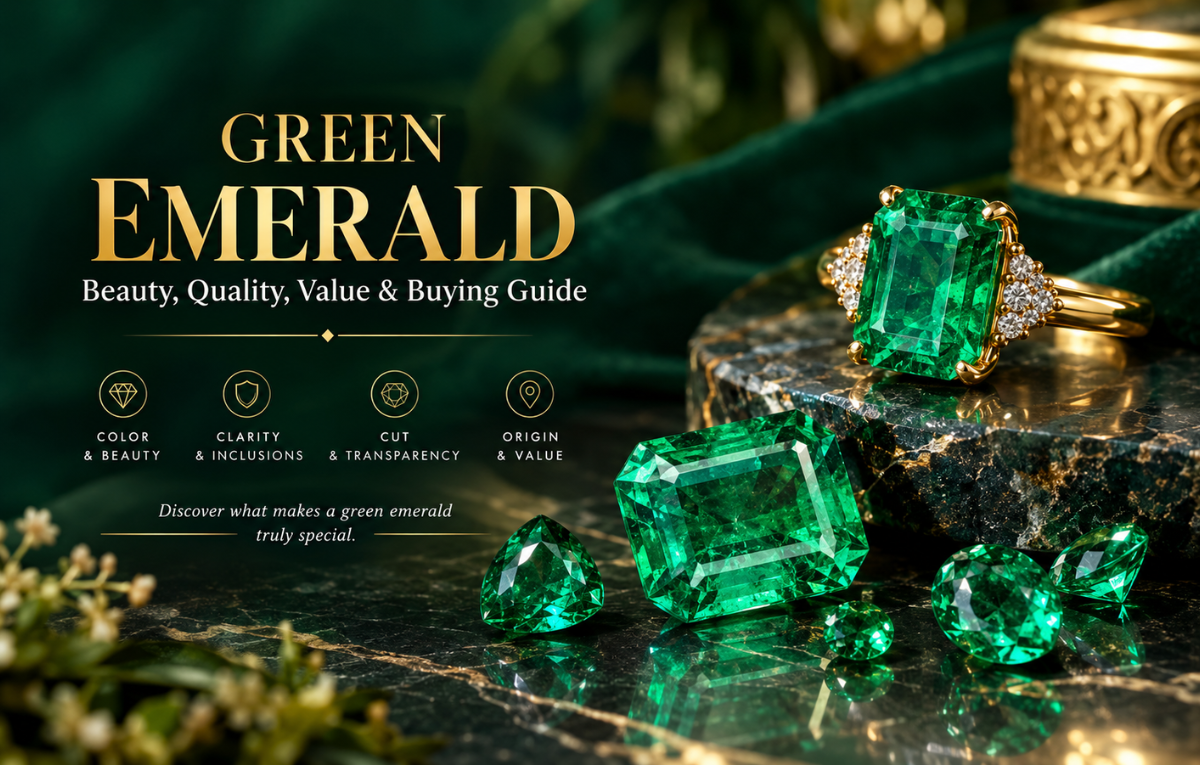
Say green emerald and most people picture the same thing: that deep, almost glowing green. There’s a reason it’s stayed a favorite for generations. Rings, necklaces, earrings- it works in all of them. But here’s what a lot of buyers get wrong. Bigger or darker doesn’t mean better. Color, clarity, transparency, cut, treatment, origin, condition- all of it decides whether an emerald’s actually worth its price tag.
What Is Green Emerald?
Emerald is beryl’s green emerald cousin, basically. Same mineral family as aquamarine and morganite. The green comes from trace chromium, sometimes vanadium, sometimes both. And it doesn’t happen fast. These things form deep underground over millions of years.
Now here’s something that trips up first-timers. Green emerald inclusions aren’t a defect. They’re kind of the point. French jewelers call it “jardin,” garden, because the patterns inside can genuinely look like leaves or moss or little branches. Buyers who know what they’re looking at actually want to see this. It’s proof the stone’s real, not some suspiciously perfect lab piece.
The Beauty Of Emerald Green Emerald Color
Color’s everything here, more than almost any other factor. You’ll see light green emerald, medium, deep, with hue, tone, and saturation all playing their part. And a smaller stone with lively, vivid green? Often beats a bigger one that just looks flat or muddy.
There’s no universal “best” shade, that’s personal taste. But a vivid, well-saturated green emerald tends to win out in fine jewelry, most of the time anyway. The stone needs enough brightness to stay lively, not dull, not blackish. One tip: check it under different lights. Daylight versus indoor lighting can genuinely change how a stone reads.
Emerald Clarity And Natural Inclusions
Forget what you know about clarity from diamonds. Emerald plays by different rules. A totally eye-clean natural emerald? Rare, especially in bigger sizes. Fractures, mineral inclusions, growth lines- they’re baked into how the stone came to exist.
So don’t go in expecting perfection. Ask instead whether the inclusions actually hurt the stone, its looks, its see-through quality, its strength. Small inclusions, usually fine. Sometimes they even add character. Big surface-reaching fractures, though, that’s a different conversation. Those weaken the stone and usually hit the price too.
Emerald Cut And Transparency
Cut changes everything about how an emerald reads. The “emerald cut” itself, step-cut, trimmed corners, is basically named after this stone. It flatters the color and gives the piece that clean, elegant look everyone associates with emerald jewelry.
You’ll also find ovals, cushions, pears, rounds- whatever suits the rough stone and the design. Cutting emerald well is a genuine skill. Push too hard trying to clean it up or reshape it, and you lose good material fast. Transparency counts too, obviously. Nice color plus real transparency- that’s when a stone actually feels alive instead of murky.
Where Are Green Emeralds Found?
Different places, different personalities. Colombia’s the name everyone knows, and for good reason, it’s basically emerald royalty at this point. Zambia’s earned its own reputation too, with a color character that’s distinctly its own.
Brazil, Ethiopia, Afghanistan, Pakistan, and a few other spots produce emeralds as well. Origin matters, sure, especially to collectors and for pricier stones. But don’t let it overshadow the actual quality in front of you. Two stones from the same country, same mine even, can still look completely different once you compare them side by side.
Are Green Emeralds Durable?
- Mohs hardness sits around 7.5 to 8. Decent, honestly.
- Should handle everyday scratches fine. But hardness isn’t the whole story with emerald. Those natural fractures make it more prone to impact damage than other stones at a similar hardness level.
- Matters most with rings, they take constant knocks against everything.
- Pendants and earrings see way less abuse, so if you want to wear emerald without worrying constantly, that’s usually the safer bet.
Emerald Treatments And Buying Considerations
Most emeralds on the market get treated somehow, usually oil-filled to hide surface fractures. That’s not inherently bad. It’s just something you need to know about upfront. A good seller will tell you without you even asking.
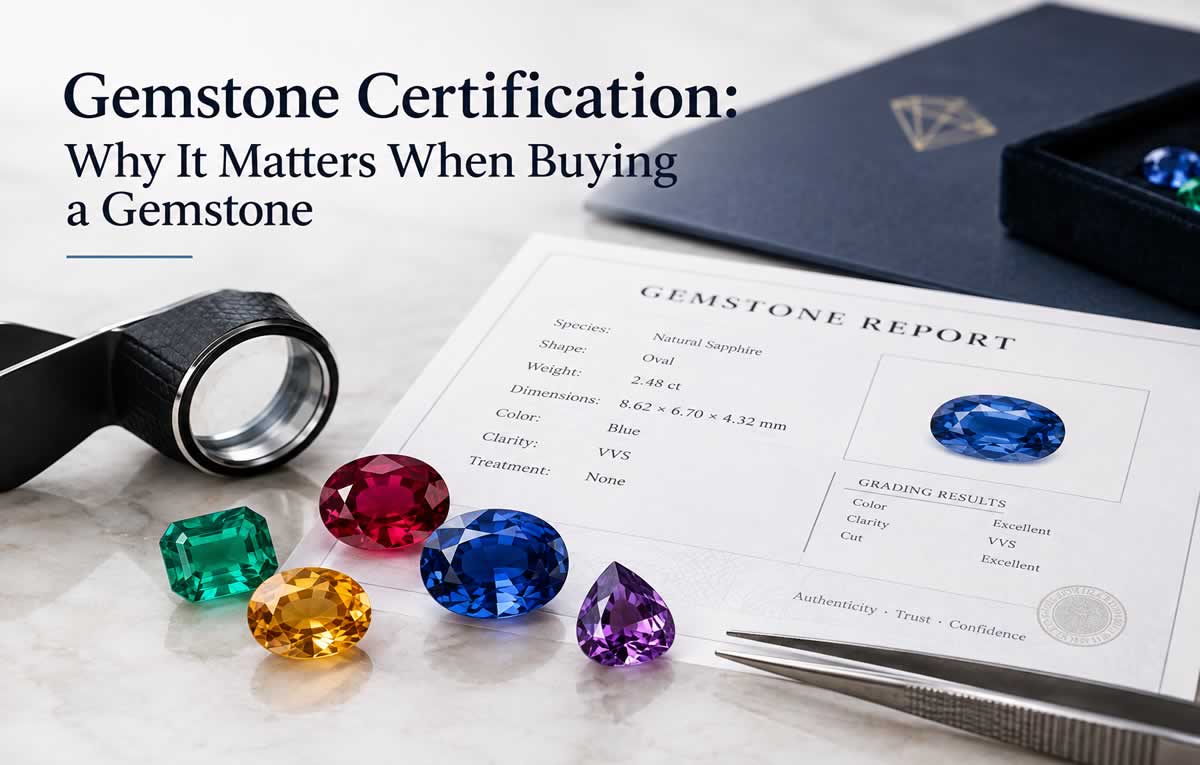
Spending real money? Ask about treatment directly. And for anything expensive, get an independent gemological report. It’ll confirm what you’re actually buying, natural origin, treatment extent, all of it.
How Much Is A Green Emerald Worth?
Prices swing a lot, stone to stone. There’s no simple per-carat math that works here. Color, saturation, clarity, transparency, cut, origin, treatment, overall look- all of it factors in. A small emerald with amazing color can easily beat out a much bigger one that’s washed out or heavily fractured. Point is, judge the whole stone. Size alone tells you almost nothing.
Green Emerald In Jewelry
Works in traditional settings, works in modern ones too. Rings stay the most popular choice, mostly because the stone becomes an instant focal point. Necklaces and pendants lean elegant. Earrings let smaller stones shine without stealing the whole show.
Pairs well with any metal really, yellow gold, white gold, platinum. Swap the metal and the same emerald can look classic one day, modern the next, luxurious after that.
How To Care For Green Emerald
Treat it gently, and it’ll last. Keep it away from hard knocks, sudden temperature swings, harsh chemicals, and unnecessary pressure. A soft cloth for everyday dust is usually enough. Go easy on ultrasonic or steam cleaners, especially with treated or heavily included stones. Those methods can mess with fractures you didn’t even know were there. Store it separately too, in a soft-lined space, away from anything harder that could scratch it.
Natural Emerald Vs. Laboratory-Grown Emerald
- Not every emerald came from the ground.
- Some are grown in labs under controlled conditions, and chemically and physically, they can be nearly identical to natural stones.
- Worth clearing up: “synthetic” isn’t a fancy word for fake.
- It just means lab-made instead of earth-made.
- Simulants are something else entirely, they just look like emerald without sharing any of its actual properties.
- Always confirm exactly what you’re buying, especially before spending real money.
Final Thoughts
Emerald keeps its pull because of that color, that natural character, that long history in fine jewelry. It was never about perfection. The inclusions, the color variation, the quirks- that’s what makes every single emerald different from the next.
Whether you’re after a ring, a loose stone, or something to collect, take your time. Look at color, clarity, transparency, cut, treatment, origin, condition. The best emerald isn’t automatically the biggest or priciest. It’s the one where color, character, and quality all line up with what you actually wanted.
FAQs
What Is a Green Emerald?
Green emerald is the green variety of beryl, colored mainly by trace chromium, vanadium, or both.
Why Are Emeralds Green?
Trace elements inside the crystal structure, mostly chromium and vanadium, give emerald its green emerald.
Are Natural Emeralds Usually Clear?
No. Natural emeralds almost always have inclusions and internal features, generally seen as part of the stone’s natural character rather than a flaw.
Are Green Emeralds Good For Rings?
Yes, though the natural inclusions mean they need a bit more careful handling than some other stones.
Are Green Emeralds Expensive?
Can be. Color, clarity, size, origin, treatment, cut, and overall quality all affect the final price.
How Should An Emerald Be Cleaned?
A soft cloth and mild soapy water work best. Skip harsh chemicals or aggressive cleaning where possible.