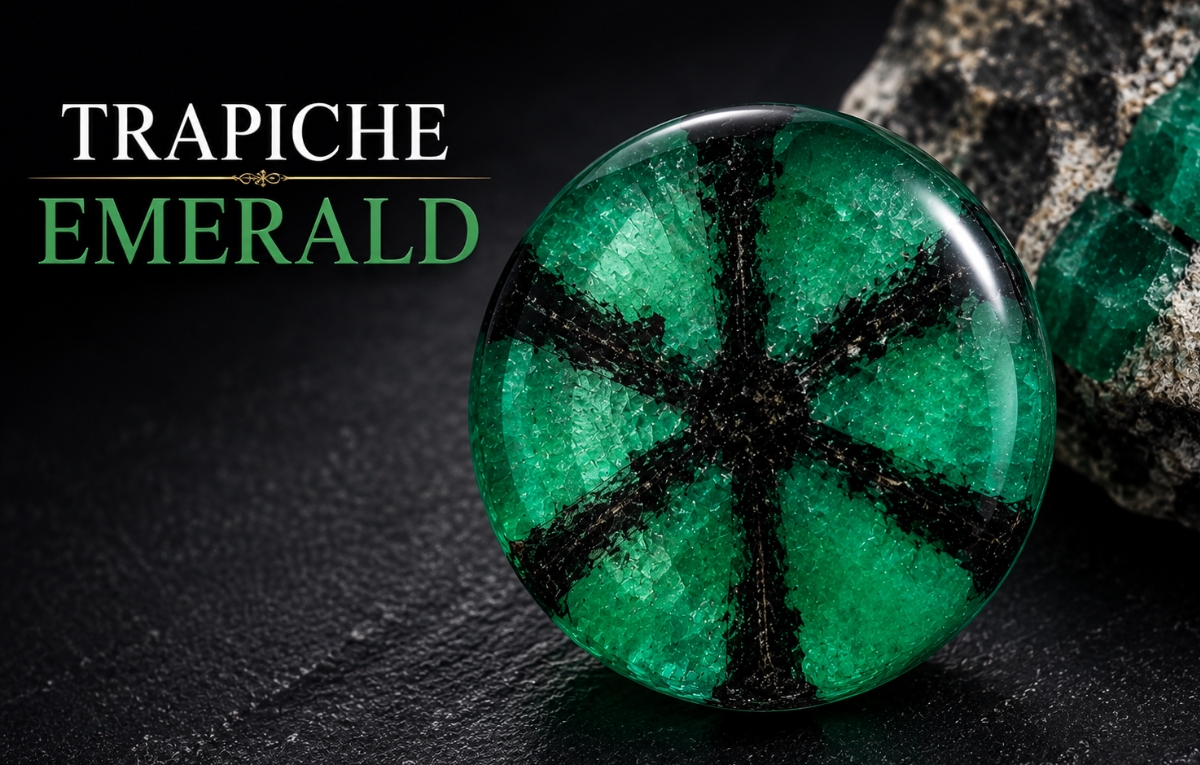
Emeralds come in wide varieties, but none has the same visual appeal as the trapiche emerald. This unique gem is known for its unique six-rayed design that is reminiscent of the spokes on a wheel. The mix of rich green emerald with contrasting black or dark lines gives the stones a striking look that is appealing to jewellery enthusiasts and jewelers.
If you are a gemstone buyer in the United States, a trapiche emerald differs from the traditional faceted emerald. Its attractiveness is due to its natural growth pattern that makes the internal structure of the stone one of its main characteristics. GIA defines the traditional Colombian stone as having a central center with six arms that are separated by dark shale borders.
What Makes This Emerald So Different?
The word trapiche emerald is a Spanish expression that describes the wheel-like mechanism that was historically linked to sugarcane processing. The term was selected since the design of the gem resembles wheels with spokes.
A typical trapiche emerald shows six arms that radiate across a central space. In contrast to an optical effect, which is triggered when a gemstone or light changes direction, the trapiche emerald pattern is stable because it is tied to the crystal’s organic growth pattern. This is a major distinction between trapiche emerald patterns and optical phenomena like an asterism.
How the Trapiche Pattern Forms
The stunning appearance of trapiche emerald is created when crystal growth occurs. The various growth zones and material create boundaries that form the distinctive six-rayed pattern.
In Colombian instances, GIA research describes six growth zones of emerald that are separated by opaque boundaries radiating from the center of the earth. These boundaries could be filled with minerals as well as trapped fluid phases. This creates the distinctive wheel-like patterns.
Since this type of structure is formed organically and naturally, no two stones are the same. The diameter of the spokes and their appearance at the centre of the stone, its color intensity, as well as overall symmetry, can differ greatly.
Colombia And The History Of Trapiche Emeralds
Colombia has been historically linked to some of the finest known trapiche emerald samples. GIA mentions that these distinct crystals can be found in host rocks of black shale that are found in a small number of Colombian mining zones within the western part of the Emerald Belt.
The unique crystals were first described scientifically in the late nineteenth century. The distinct appearance continues to make them a key area of research for gemologists. Colombian crystals are especially sought-after due to their unique colors of emerald and the clearly visible radial pattern.
Why the Cut Matters
The standard faceted cut is not the ideal method to display the trapiche emerald design. One of the most intriguing aspects of this stone’s internal structure is that cutters will often tilt their stone in order to make the 6-rayed pattern apparent.
Slices and cabochons are frequently used as they are able to display patterns clear across the surface of the gem. GIA mentions that trapiche emerald gems that are sold in the gem trade are often cut in slices or cabochons that are perpendicular to the crystal’s sixfold axis in order to show the distinctive design.
The stone that is well cut should permit viewers to see the entire natural beauty of the stone as well as maintain an appealing harmony between pattern and color.
What to Look for When Buying One
If you are evaluating an emerald from a trapiche emerald, the usual criteria used to evaluate traditional emeralds remain pertinent, however, the nature of the design also requires special consideration.
- Pattern transparency: A crystal clear and identifiable pattern with six rays is among the primary motives why collectors are drawn to the stones.
- Color: The color green must be appealing and complement the trapiche emerald style. The color can vary from light green to more pronounced hues.
- Symmetry: A perfect symmetry of a pattern is not necessary because the design is organic, though a harmonious design may improve the aesthetic impact.
- Condition: Check the stone for chips, cracks, as well as durability issues, in particular in the event that it will be set into jewelry.
- Documentation and origin: For major purchases, trustworthy buyer information as well as independently verified gemological documents can give more assurance.
Jewelry With a One-of-a-Kind Appearance
A trapiche emerald could make stunning centerpieces for personalized jewelry. Because each pattern is distinct, any set can show the distinctiveness of the gem.
Pendants can be used to show the entire surface of the gemstone. Rings also can create an attractive appearance if the stone is secured with a suitable setting. If you are a collector who likes to showcase the natural form of their stones with no significant modification, polished pieces and minerals can look particularly attractive.
The unique geometrical structure of trapiche emerald gems offers jewelry designers the chance to make pieces that emphasise the natural symmetry of the stones.
Trapiche Emeralds Beyond Colombia
While Colombian materials are the standard and well-known example, GIA has also documented the emeralds of Pakistan’s Swat Valley that exhibit trapiche-like patterns as well as a pattern of growth that resembles trapiche emerald. They can exhibit different variations of green zones, central cores, and radial arms.
This shows that a strange radial growth pattern can be observed across different geological settings however, truly distinct trapiche emerald gems are extremely rare.
Caring for Your Gemstone
Emerald is a fairly robust stone, however, it needs to be handled with care. The trapiche emerald that is intended to be used in jewelry must be shielded against hard hits that may cause damage to the stone or the setting.
Make sure to gently clean the item and stay clear of extreme cleaning procedures in the event that they’re known to work with that particular stone and the treatment that it has received. If you have precious gemstones, professional cleaning as well as regular examination are recommended.
In the event that jewelry is not worn When jewelry is not being worn, having it stored separately will help avoid damage from scratches or accidental scratching.
A Gemstone for Collectors and Individualists
- The enticement of a trapiche emerald gem isn’t solely based on the standard clarity or the appearance of faceting.
- The natural design is an integral part of the character.
- Collectors can appreciate the history that is preserved in the crystal, as jewelry buyers might find themselves drawn by the fact that each crystal exhibits its own particular layout of spokes as well as hue zones.
- For anyone who lives in the United States looking beyond conventional earrings, the emerald stone has a distinct blend of minerals and a vibrant hue.
Final Thoughts
The trapiche emerald is unique for its remarkable natural, six-rayed design. From its appearance resembling a wheel and geological structure to its inclusion in customized jewelry, it has features that conventional emerald cuts can’t duplicate.
In deciding which one to choose, be sure to consider the pattern’s visibility, color, and condition. Also, consider the cutting pattern and your reliable record. The unique natural style of the trapiche emerald could be a stunning piece of jewelry or be a unique item of jewellery.