Ever notice that purple crystals never mean one thing? Pale lavender. Deep violet, almost black under dim light. Plum. Something reddish that doesn’t quite fit either box. That’s purple crystals in a nutshell, and it’s exactly why they pull in such different people: jewelry buyers, collectors, and folks who just like a nice stone sitting around.
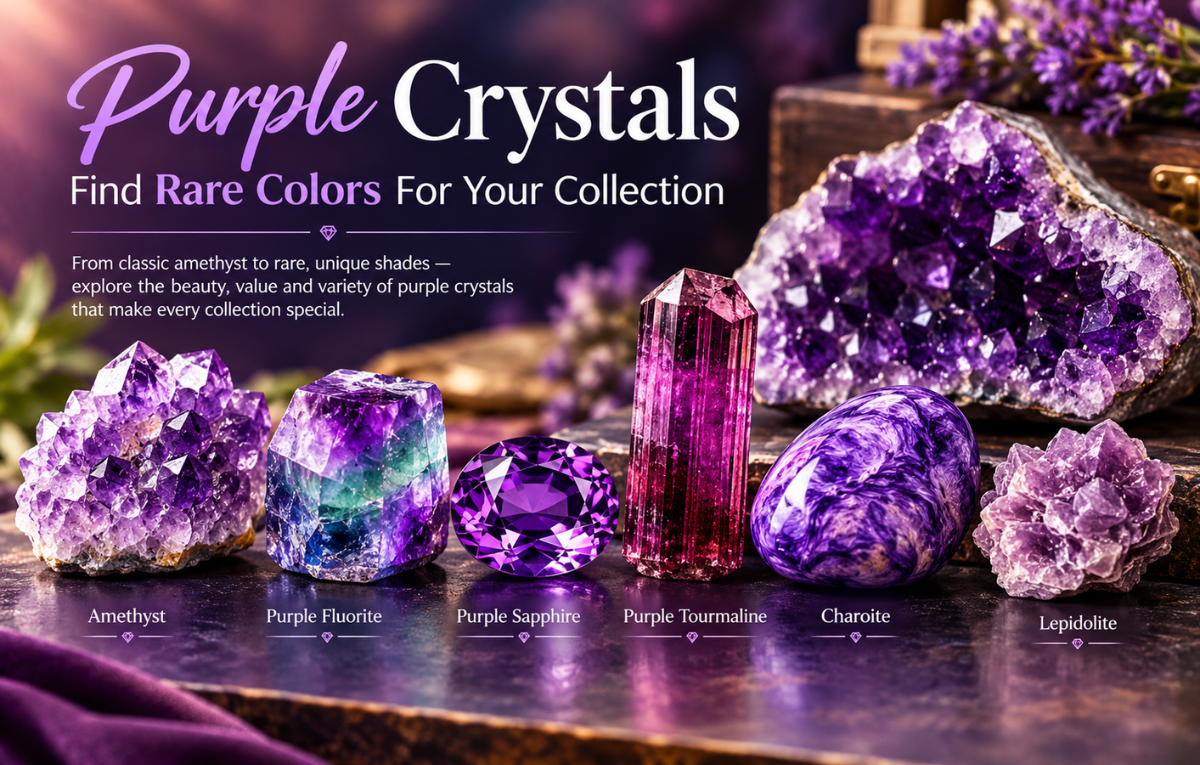
Quick myth to clear up first. “Purple crystal” isn’t one mineral. Amethyst gets all the attention, sure, but purple fluorite, purple sapphire, purple crystal tourmaline, charoite, lepidolite. All purple. All completely different once you actually compare them. Hardness differs. Rarity differs. Price differs a lot, honestly.
Why Purple Crystals Are So Popular
Purple reads as luxury. Always has. A crystal just makes that feeling more real. Pale purple crystals stay quiet, understated. Deep saturated violet? People notice it across the room. Variety’s the other draw. Put two purple crystal stones side by side, and they can look like different minerals entirely. Hue, tone, saturation, even how light passes through- it all shifts the picture.
So you get options. Go with amethyst if familiar suits you. Or chase something odd: weird patterns, natural formations, a shade that doesn’t come around often.
Popular Types Of Purple Crystals
Amethyst
The obvious one. A quartz variety running from pale lilac to medium violet, sometimes deep reddish-purple crystals that border on wine-colored. Some pieces stay even in color throughout. Others band, light here, dark there, and plenty of buyers actually prefer that look. Feels less manufactured somehow.
You’ll find it in rings, necklaces, earrings, bracelets, and big decorative clusters too. Available, good-looking, tough enough for regular wear. Skip the size-chasing, though. Color, transparency, clarity, cut- those tell you more than carat weight ever will.
Purple Fluorite
Here’s an odd one. A single fluorite crystal can hold multiple colors at once, purple crystals bleeding into green, blue, clear patches, natural zoning that makes every specimen genuinely unique.
Collectors love that. But fluorite’s soft. Softer than most jewelry stones, which means gentle handling only. Decorative pieces, occasional-wear jewelry- that’s really its lane.
Purple Sapphire
- Underrated, if you ask me. Blue sapphire gemstone gets all the spotlight while purple crystals sit quietly in the corundum family, showing off violet, pinkish-purple, deeper purple crystal tones.
- Toughness is the real selling point. Sapphire’s hard, so this handles everyday wear without drama. Want unusual but durable? Start here.
Purple Tourmaline
- Tourmaline comes in practically every color, and purple crystals are part of that lineup. Soft violet in some pieces. Stronger, reddish-purple crystals in others.
- That unusual color, plus a solid polish, makes it a good fit for modern designs. Worth a look if amethyst feels too predictable.
What Gives Purple Crystals Their Color?
Not every purple stone gets there the same way. Chemical elements, impurities, structure, geological history- the cause shifts from mineral to mineral. Amethyst’s purple crystals come from iron plus natural irradiation inside the quartz. Other purple crystal minerals run on entirely different chemistry. So purple crystals aren’t the whole story. Shade, intensity, transparency, how the color’s distributed- all of it matters for quality.
Color, Clarity And Transparency
- Color grabs you first. Fine. But clarity and transparency do the heavy lifting.
- Transparent purple crystal gems let light through, and a good cut turns that into real brightness and sparkle.
- Clarity doesn’t carry the same weight everywhere, though. Faceted stones usually want clean material.
- Raw specimens are a different game, inclusions and zoning can make a piece more interesting, not less, to the right collector.
- Depends what it’s for. Jewelry buyers want brilliance and transparency. Collectors often care more about natural formation and whatever odd internal features show up.
Choosing Purple Crystals For Jewelry
Rings take constant abuse- tables, doors, keyboards- so harder stones like sapphire make sense there. Amethyst holds up fine too, properly set and cared for. Softer ones, fluorite and lepidolite, need more protection. Pendants and occasional wear suit them better.
Necklaces and earrings, they take fewer hits generally. More room to pick something delicate without stressing.
Buying Purple Crystals In The USA
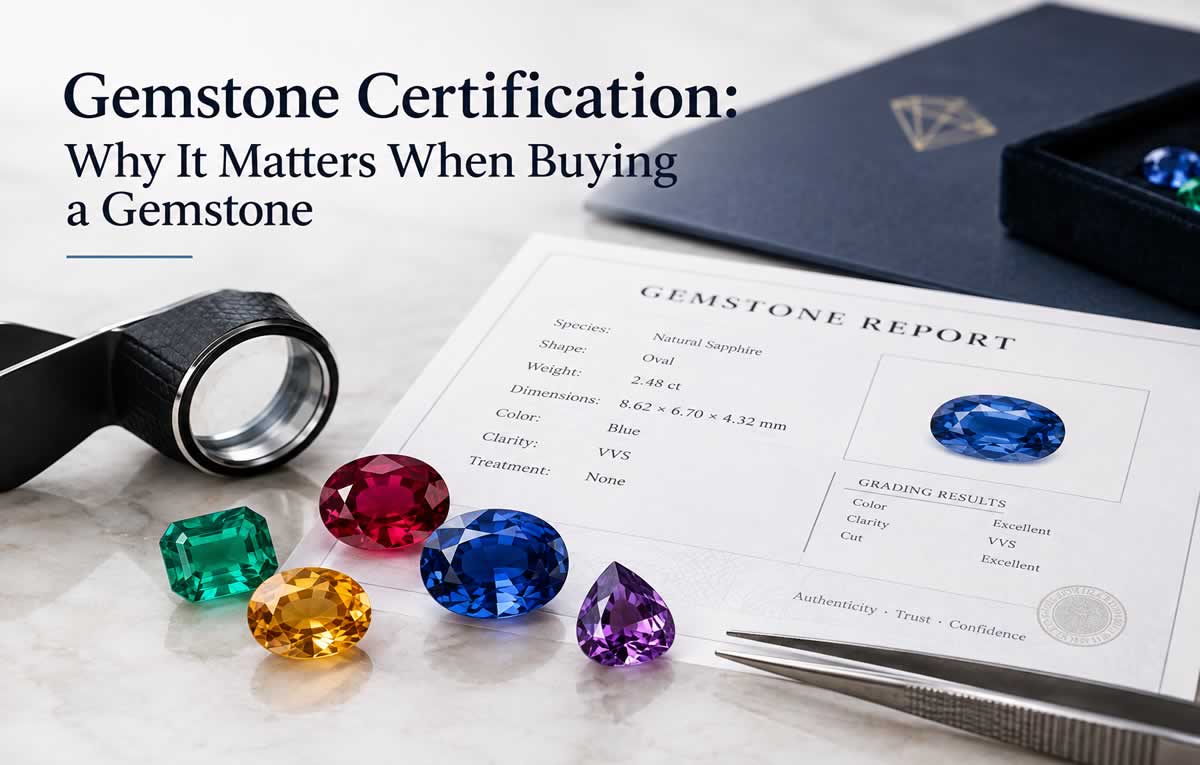
Plenty of options here: jewelry stores, mineral dealers, online shops, specialist collectors. Online gives you more choice, obviously, but read listings carefully. Photos deceive sometimes. A stone can look darker, more saturated on a screen than it does in actual daylight. Valuable piece? Ask for extra photos or a short video. Check real measurements, weight, condition, and treatment info rather than guessing from a picture. Expensive stone, get a gemological report if you can swing it. Confirms identity, flags what matters.
How To Care For Purple Crystals
Care depends on the mineral. Gentle handling is almost always the safe answer. Don’t drop crystals on hard surfaces. Keep pieces apart in storage so they can’t scratch each other. Soft cloth and everyday dust- that combo works on most gemstones. Skip harsh chemicals, high heat, anything you’re unsure about. Softer crystals scratch or chip more easily, so they need extra care.
Final Thoughts
Purple crystals bring color, variety, and character together as few other categories do. Amethyst stays the classic pick. Purple fluorite, purple sapphire, purple crystal tourmaline, charoite, the rest- they each bring something else to the table.
Buying for jewelry or hunting a specimen to collect, either way, take your time comparing color, clarity, transparency, durability, condition, and treatment status. The most beautiful purple crystal usually isn’t the biggest or priciest. It’s the one whose color and character actually match what you wanted.
FAQs
What Are The Most Popular Purple Crystals?
Amethyst, by far. Purple fluorite, purple sapphire, purple tourmaline, charoite, and lepidolite are popular too.
Are Purple Crystals Good For Jewelry?
Some, definitely. Softer varieties need careful handling, though, so weigh durability before picking something for daily wear.
What Is The Most Common Purple Gemstone?
Amethyst, no real competition. Widely available in a lot of shades and forms.
Are Purple Crystals Expensive?
Depends on the mineral, color, quality, size, rarity, condition, and whether it’s natural or treated.
How Should Purple Crystals Be Stored?
Keep them separate in a soft-lined container, away from scratches, hard impacts, harsh chemicals, and heat.