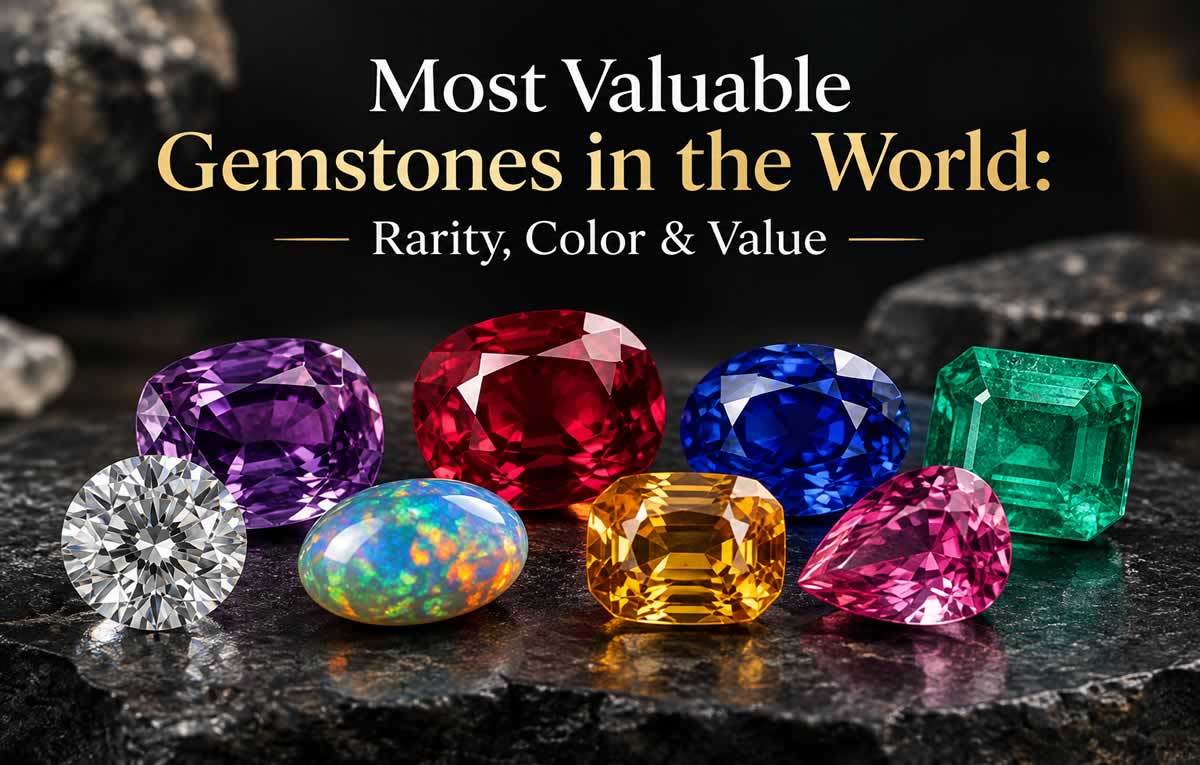
Most Valuable Gemstones in the World: Rarity, Color & Value
Gemstones have fascinated people for thousands of years. Their extraordinary colors, natural beauty and rarity have made them symbols of wealth, status and craftsmanship across different civilizations. Today, some of the most valuable gemstones can command extraordinary prices because exceptional examples are extremely rare.
While diamonds are widely recognized, the world of colored gemstones includes many stones that can be considerably rarer. Fine ruby, sapphire, emerald, alexandrite, Paraíba tourmaline and other exceptional gemstones can achieve remarkable values when they possess the right combination of color, clarity, size, origin and quality.
But what actually makes a gemstone valuable?
The answer is more complicated than simply looking at carat weight. Rarity, color, clarity, origin, treatment, cut, size and market demand can all have a major influence on the value of a natural gemstone.
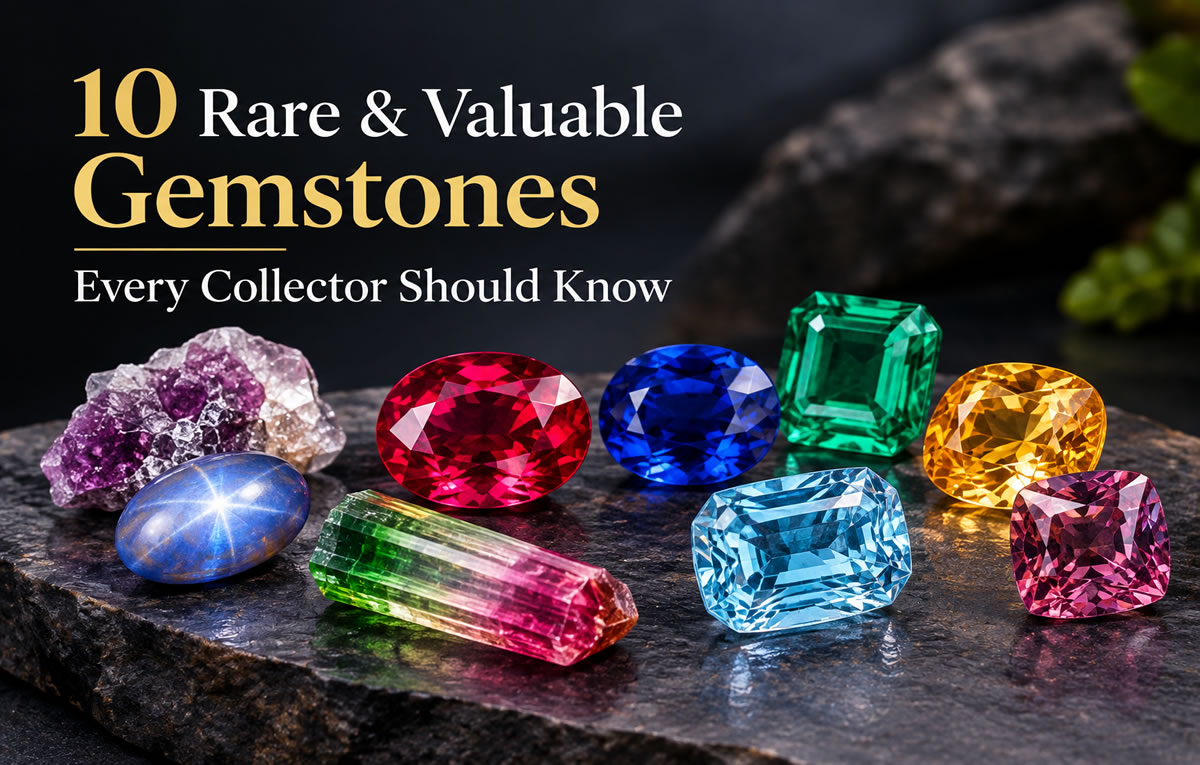
In this guide, we explore some of the world’s most valuable gemstones and explain the characteristics that make exceptional specimens so desirable to collectors and jewelry enthusiasts.
What Makes a Gemstone Valuable?
Before looking at individual gemstones, it is important to understand the factors that determine gemstone value.
Unlike many manufactured products, natural gemstones can vary enormously from one stone to another. Two gemstones of the same species and identical carat weight can have dramatically different values.
The most important factors generally include:
- Color
- Rarity
- Clarity
- Carat weight
- Origin
- Treatment
- Cut and proportions
- Transparency
- Optical phenomena
- Market demand
- Certification and documentation
For many colored gemstones, color is one of the most important value factors.
A smaller gemstone with exceptional color can sometimes be worth significantly more than a much larger stone with weak or undesirable color.
1. Ruby
Ruby is one of the world’s most famous precious gemstones and can be among the most valuable gemstones when exceptional quality is present.
The finest rubies are prized for vivid, saturated red color. Exceptional Burmese rubies, particularly those with highly desirable color and strong fluorescence, have achieved extraordinary prices at major auctions.
Why Is Ruby So Valuable?
Ruby value can be influenced by:
- Strong, vivid red color
- Excellent transparency
- Attractive fluorescence
- Fine clarity for the material
- Large size
- Desirable origin
- Lack of significant treatment
- Quality of cut
The term “pigeon blood” is often associated with highly prized red ruby color, although color descriptions and grading terminology can vary between laboratories and markets.
Fine untreated ruby is particularly desirable because high-quality natural material without significant treatment can be exceptionally rare.
2. Blue Sapphire
Blue sapphire is another gemstone capable of reaching extraordinary prices, particularly when it has exceptional color, clarity, origin and lack of treatment.
Among collectors, historic Kashmir sapphires are particularly famous for their velvety blue appearance.
Exceptional sapphires from Myanmar, Sri Lanka and other important sources can also be highly valuable.
What Makes Blue Sapphire Valuable?
Important factors include:
- Vivid blue color
- Desirable saturation
- Excellent transparency
- Fine clarity
- Strong cutting quality
- Large carat weight
- Desirable origin
- Lack of treatment
Untreated sapphires with exceptional color can command substantial premiums.
However, origin should not automatically be interpreted as a guarantee of quality. A sapphire’s actual characteristics remain extremely important.
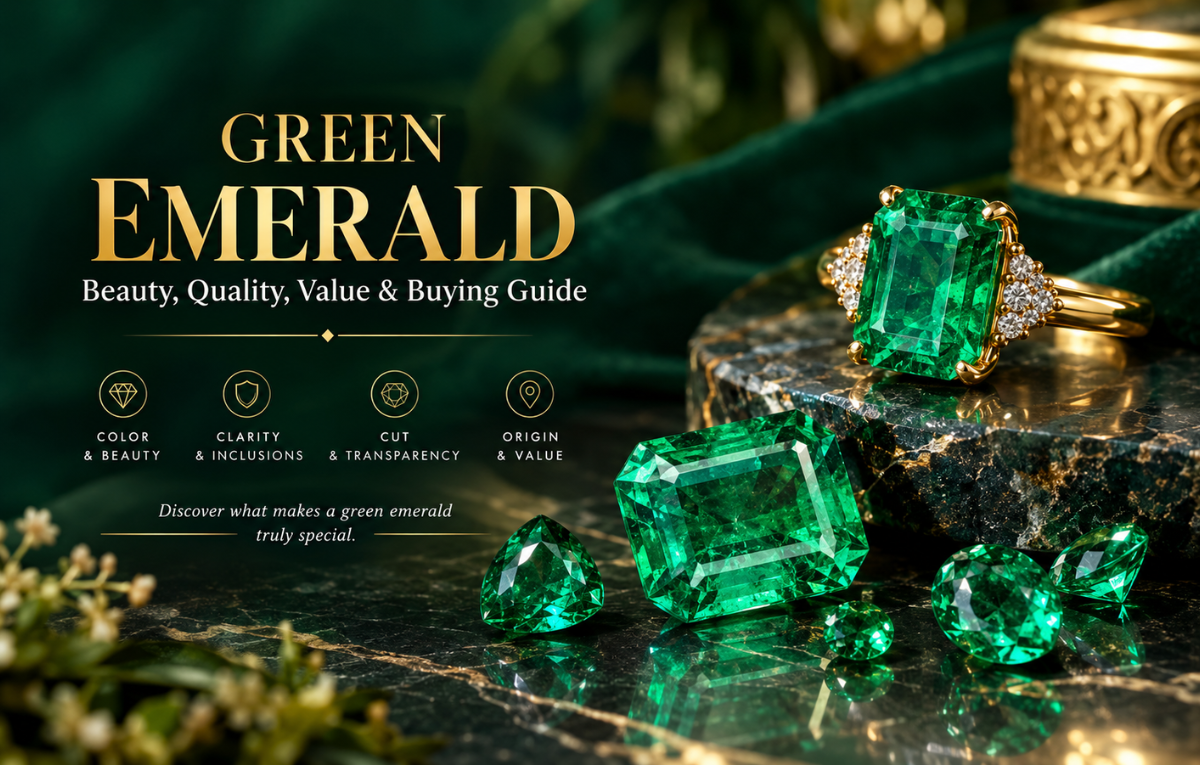
3. Emerald
Emerald is one of the world’s most recognizable green gemstones and has been prized for centuries.
Exceptional Colombian emeralds are particularly famous, but fine emeralds can come from several locations around the world.
Unlike sapphire and ruby, emeralds commonly contain inclusions. These internal characteristics are so common that the term “jardin” is often used to describe their garden-like appearance.
What Determines Emerald Value?
High-value emeralds may possess:
- Rich green color
- Strong saturation
- Good transparency
- Attractive internal character
- Large size
- Excellent cutting
- Desirable origin
- Minimal enhancement
Because emeralds are often treated with oils or other substances to improve apparent clarity, treatment disclosure is particularly important when comparing stones.
4. Alexandrite
Alexandrite is one of the world’s most fascinating rare gemstones because of its dramatic color-changing ability.
A fine alexandrite can appear greenish or bluish-green in daylight and shift toward reddish or purplish tones under incandescent or warm lighting.
This phenomenon is known as color change.
Why Is Alexandrite Valuable?
Exceptional alexandrite can be highly valuable because it combines:
- Strong color change
- Attractive colors
- Good transparency
- Fine clarity
- Large size
- Natural origin
- Quality cutting
Fine natural alexandrite in larger sizes is particularly rare.
5. Paraíba Tourmaline
Paraíba tourmaline is famous for its exceptionally vivid blue, greenish-blue and neon-like colors.
The original deposits in Paraíba, Brazil produced material that transformed the colored gemstone market.
Copper-bearing tourmalines with exceptional electric blue or blue-green colors can command very high prices.
What Makes Paraíba Tourmaline Valuable?
Important characteristics include:
- Electric blue or blue-green color
- Strong saturation
- High visual brightness
- Transparency
- Copper-bearing chemistry
- Natural origin
- Size
- Quality cutting
Because fine material is scarce, exceptional specimens can be particularly attractive to collectors.
6. Red Beryl
Red beryl is one of the rarest gemstones encountered in the jewelry and collector market.
It is known for its intense red to raspberry-red color. Gem-quality crystals are uncommon, and larger faceted stones are particularly difficult to obtain.
Why Is Red Beryl So Rare?
Gem-quality red beryl is limited by:
- Scarcity of gem-quality crystals
- Small typical crystal sizes
- Difficulty producing larger faceted stones
- Limited availability
Its combination of rarity and attractive red color makes it highly interesting to collectors.
7. Paraiba-Style Copper-Bearing Tourmaline
Copper-bearing tourmaline from locations outside the original Paraíba deposits can also display extraordinary neon blue and green colors.
Material from countries such as Mozambique and Nigeria has produced tourmalines with colors visually similar to Brazilian Paraíba tourmaline.
Because origin and laboratory determination can be important in the market, reputable laboratory reports are valuable when purchasing significant stones.
8. Musgravite
Musgravite belongs to the taaffeite mineral group and is known for its rarity.
It can occur in colors ranging from grayish-green and green to purplish or brownish tones.
Gem-quality musgravite is exceptionally uncommon, making it a fascinating gemstone for serious collectors.
Why Collectors Like Musgravite
- Extreme rarity
- Limited gem-quality material
- Distinctive colors
- Collector interest
- Strong geological significance
Because rare gemstones can be difficult to identify conclusively, laboratory certification is particularly important.
9. Taaffeite
Taaffeite is another exceptionally rare gemstone.
Interestingly, taaffeite was initially mistaken for spinel. It was identified as a separate mineral after examination of a gemstone believed to be spinel.
Taaffeite can display pink, purple, mauve and other colors.
Its extreme rarity makes it more familiar to gemstone collectors than to the general jewelry-buying public.
10. Demantoid Garnet
Demantoid is a green variety of andradite garnet and is one of the most highly regarded garnets among collectors.
It is famous for its vivid green color and exceptionally high dispersion, which can produce impressive flashes of spectral color.
Some Russian demantoids are also known for distinctive “horsetail” inclusions.
What Makes Demantoid Valuable?
- Vivid green color
- High dispersion
- Excellent brilliance
- Rarity
- Desirable origin
- Attractive inclusions in some specimens
- Fine cutting
For collectors, natural inclusions can sometimes add interest rather than simply reducing desirability.
11. Paraíba Tourmaline and Other Rare Tourmalines
Tourmaline is an extraordinarily diverse gemstone family. Besides Paraíba-type material, other rare tourmalines can be highly collectible.
Examples include:
- Rubellite
- Indicolite
- Chrome tourmaline
- Watermelon tourmaline
- Bi-color tourmaline
- Canary-colored tourmaline
Color zoning and unusual combinations can make individual tourmalines especially interesting.
The best specimens combine exceptional color with good transparency, attractive cutting and strong overall visual appeal.
12. Fine Spinel
Spinel was historically confused with ruby and sapphire because of its attractive colors and similar appearance.
Today, exceptional natural spinel is highly respected by collectors.
Red, pink and cobalt-blue spinel can be particularly desirable.
Why Is Fine Spinel Valuable?
- Strong natural colors
- Excellent brilliance
- Increasing collector demand
- Rarity of exceptional material
- Often available without routine treatment
Fine spinel can provide an attractive alternative to ruby or sapphire while still possessing significant collector appeal.
How Does Color Affect Gemstone Value?
Color is one of the most important factors when evaluating many colored gemstones.
A valuable gemstone usually has a combination of:
Hue + Tone + Saturation
Hue
Hue refers to the basic color, such as:
- Red
- Blue
- Green
- Yellow
- Pink
- Purple
Tone
Tone describes how light or dark the gemstone appears.
Saturation
Saturation describes the intensity or strength of the color.
The ideal combination differs from one gemstone species to another.
For example, a desirable ruby typically benefits from a strong, vivid red appearance, while a fine sapphire may be prized for intense blue with attractive saturation.
Why Rarity Matters
Rarity is a fundamental reason why some gemstones command extraordinary prices.
However, rarity alone does not automatically make a gemstone expensive.
A gemstone may be extremely rare but have limited demand. Another gemstone may be relatively more available but highly sought after because of its color, history or cultural importance.
The highest values generally occur when rarity and desirability overlap.
Factors contributing to rarity include:
- Limited geological deposits
- Scarcity of gem-quality rough
- Difficulty producing large crystals
- Exceptional color
- Natural optical phenomena
- Lack of treatment
- Desirable origin
Does Carat Weight Determine Gemstone Value?
Carat weight is important, but it should never be considered alone.
As gemstones become larger, truly fine examples often become disproportionately rarer.
For some gemstones, a one-carat stone and a five-carat stone of similar quality can have dramatically different prices per carat.
This is particularly noticeable with rare colored gemstones where large, fine examples are difficult to find.
Why Origin Can Affect Value
The geographic origin of a gemstone can influence its desirability and market value.
Certain locations have become historically associated with exceptional gemstones.
Examples include:
- Kashmir — sapphire
- Burma/Myanmar — ruby and sapphire
- Colombia — emerald
- Sri Lanka — sapphire and other gemstones
- Brazil — tourmaline, emerald and many other minerals
- Russia — demantoid and historic alexandrite
However, origin should be supported by appropriate laboratory evidence when it is being used as a significant factor in valuation.
An origin label does not automatically mean that every gemstone from that locality is high quality.
How Treatment Affects Gemstone Value
Many gemstones undergo treatments to improve their appearance.
Common treatments include:
- Heat treatment
- Fracture filling
- Oiling
- Diffusion
- Irradiation
- Surface coating
- Dyeing
Treatment is not necessarily a negative characteristic. Many treatments are accepted in the gemstone industry.
However, treatment should be disclosed because it can significantly influence value, rarity and care requirements.
Exceptional untreated gemstones can command substantial premiums when comparable treated material is more common.
Natural vs Synthetic Gemstones
A natural gemstone forms through geological processes in nature.
A synthetic gemstone is laboratory-created but has essentially the same chemical composition and crystal structure as its natural counterpart.
Synthetic gemstones can be beautiful and useful in jewelry, but they should not be represented as natural.
For valuable gemstones, an independent laboratory report can help establish:
- Natural or synthetic status
- Treatment
- Species and variety
- Sometimes geographic origin
- Other identifying characteristics
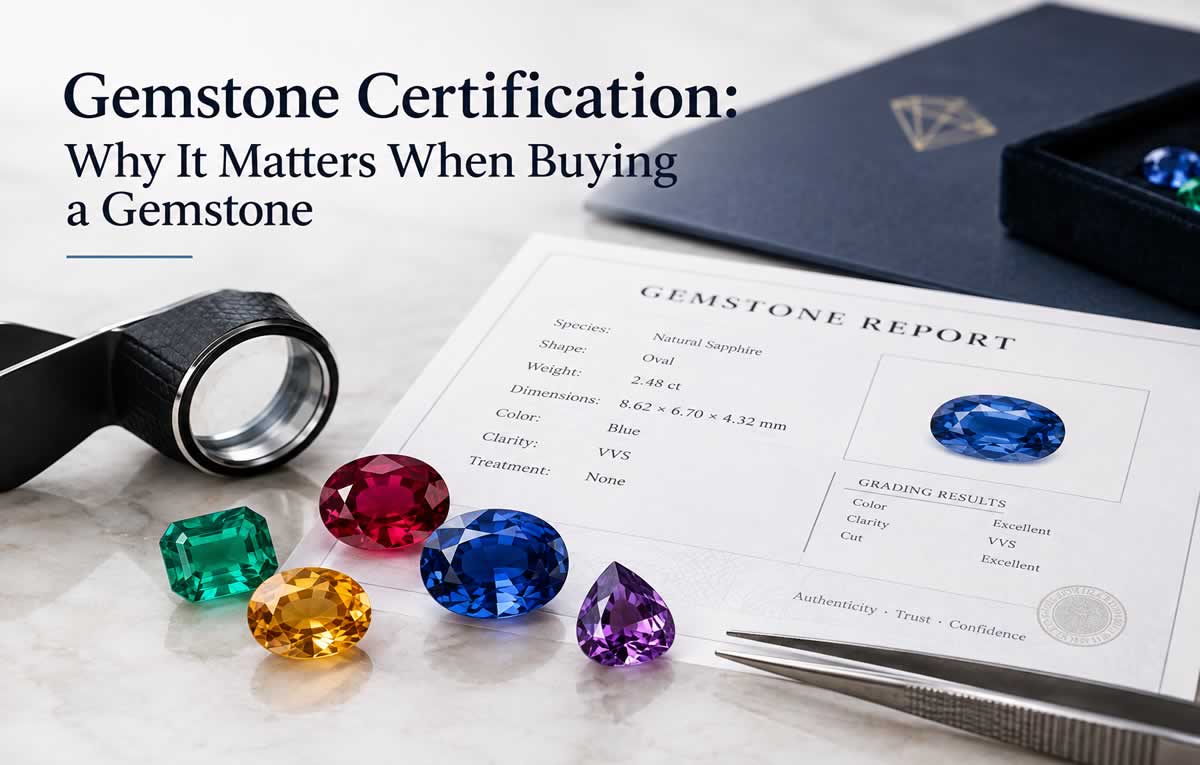
Why Certification Matters for Valuable Gemstones
When purchasing an expensive gemstone, certification can provide important additional confidence.
A reputable gemological laboratory may examine the stone and issue a report identifying relevant characteristics.
Depending on the gemstone and laboratory, a report may address:
- Gemstone identity
- Natural or synthetic status
- Detectable treatments
- Geographic origin when determinable
- Color
- Other observations
For rare and expensive gemstones, professional documentation can be especially valuable.
Are the Most Valuable Gemstones Good Investments?
Rare gemstones can have collectible and investment appeal, but purchasing gemstones solely as an investment carries risks.
Prices can depend on:
- Market demand
- Economic conditions
- Fashion trends
- Rarity
- Quality
- Provenance
- Certification
- Liquidity
- Dealer reputation
Unlike publicly traded investments, gemstones do not have a single transparent global market price.
Anyone considering gemstones as an investment should research the market carefully and obtain professional advice when appropriate.
How to Buy a Valuable Natural Gemstone
If you are considering purchasing one of the most valuable gemstones, take your time before making a decision.
1. Understand the Gemstone
Learn about the specific gemstone’s normal color range, treatments, inclusions and market characteristics.
2. Request Treatment Information
Always ask whether the gemstone has been treated.
3. Check the Laboratory Report
For significant purchases, consider an independent laboratory report.
4. Examine Color Carefully
Color can have a major effect on value.
5. Review the Cut
Look at proportions, symmetry, polish and overall appearance.
6. Verify the Measurements
Carat weight alone does not tell you how large a gemstone will appear.
7. Compare Similar Stones
Compare gemstones with similar color, clarity, size, treatment and origin documentation.
8. Buy From a Reputable Seller
A trustworthy seller should clearly disclose important gemstone characteristics and provide accurate documentation.
Final Thoughts
The world’s most valuable gemstones are not valuable simply because they are beautiful. Their extraordinary prices can result from a combination of rarity, exceptional color, clarity, size, origin, treatment status, cutting quality and market demand.
Ruby, blue sapphire, emerald, alexandrite, Paraíba tourmaline, red beryl, demantoid garnet, spinel and other rare gemstones demonstrate just how diverse the world of precious and collectible stones can be.
For collectors and jewelry enthusiasts, understanding these factors is essential. A gemstone does not need to be the largest or most expensive stone to be special. Sometimes an exceptional color, unusual optical phenomenon, fascinating origin or remarkable natural formation can make a gemstone truly extraordinary.
When buying valuable natural gemstones, always focus on authenticity, quality, treatment disclosure, certification and the reputation of the seller. With proper knowledge, collecting gemstones can become not only an enjoyable hobby but also a fascinating exploration of geology, history, craftsmanship and natural beauty.