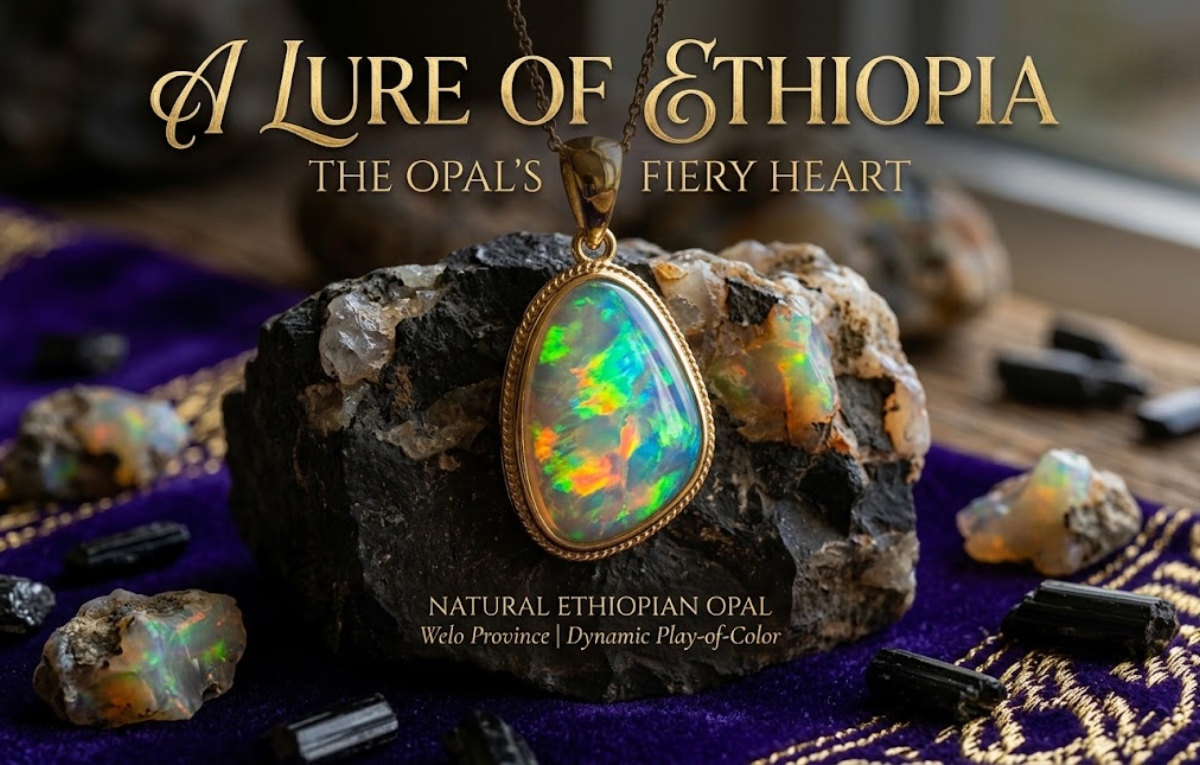
Certain gems are admired due to their vivid colour, and some stand out for how they react to the light. Ethiopian Opal is a part of the second group of. Its surface may show streaks of green, blue and orange. It also displays yellow, and red. Sometimes, they appear then disappearing while the stone shifts.
The changing effect of the optical spectrum is known as play-of color, and is one of the primary reasons why the opal gemstone has been a popular choice with jewelry collectors and lovers.
Ethiopian Opals are fascinating since individual stones appear quite different. They’re patterns, colors for the body along with transparency and flashes may create an incredibly unique look.
Where Does Ethiopian Opal Come From?
Ethiopia is now a major natural source of opals and is a popular choice for material with an beautiful play-of-color. Ethiopian Opals are mostly related to volcanic geological conditions in which silica-rich fluids played a role to the formation of opals.
Diverse Ethiopian deposits may create opals that have different characteristics. Certain stones could be light in hue, while other stones could appear darker or more transparent.
The diversity of the geology is responsible for the variety of colors present in Ethiopian Opal.
What Makes Its Play-of-Color Special?
The most attractive feature of opals is their ability to show changing shades under illumination.
Instead of displaying a permanent color, as are many other transparent stones, Opal may display several flashes based upon its angle and lighting conditions.
It is possible to see:
- Blue flashes
- Green highlights
- Tons of yellow
- Orange fire
- Flashes of red
- Multicolor patterns
The intensity and distribution of these hues can vary dramatically from one stone to one.
Understanding Different Ethiopian Opal Types
There is no guarantee that all Ethiopian ore has the exact look and feel. They can vary in the transparency color, body tone, patterns and color play.
Crystal Ethiopian Opal
Crystal opals can possess an extremely transparent or transparent body that allows the inner pattern of color to show in the stone.
White or Light-Body Opal
The stones are lighter in background, which can create an appealing contrast to colorful flashes.
Darker-Body Opal
- A few Ethiopian materials can show deeper colors, which make the flashes’ vibrant colors appear more prominent.
- As the features of opals vary significantly, taking the time to study each stone is more important than simply assuming that every Ethiopian Opal is alike.
Ethiopian Opal for Jewelry
The unique design of Ethiopian Opal is a good choice to be used in a range of jewellery designs. Earrings, pendants, rings and other statement pieces show off its various shades.
An easy setting allows the stone to be the focus of attention without obscuring it. Adding the diamond or another gemstone will give it a richer design.
If you’re someone who enjoys quirky jewellery, an opal that has bright multicolor flashes is a great option. an appearance that’s hard to duplicate using other stones.
Choosing an Ethiopian Opal
When choosing an opal, you must look beyond the overall hue. Numerous factors influence the appeal and appearance of a particular stone.
Play-of-Color
See how clear the hues appear and how they alter when the gemstone moves.
Pattern
The pattern of colors could create a variety of visual effect. Certain stones display broad areas of color. Others have smaller flashes, or intricate designs.
Body Tone
The color of the background influences the way that color plays are seen.
Transparency
A few Ethiopian ores have a higher degree of transparency or transparent than other opals. It can affect the clarity and appearance of the gem.
Cut
The design and shape will maximize the natural colors of the stone and still maintain a pleasing overall appearance.
Natural Characteristics Matter
One of the fascinating aspects of natural opal is the fact that imperfections and internal traits may occur naturally in the process of formation.
Instead of expecting each stone appear uniformly Buyers should assess every stone on the basis of the individuality of its appearance and quality.
For those who collect, these natural features can create a more intriguing gemstone as no two gemstones will be identical.
Caring for Ethiopian Opal
- Opal needs careful consideration. Even though it could be used effectively in jewelry however, it’s generally less durable and more vulnerable to impact in comparison to harder gemstones like diamond and sapphire.
- Beware of exposing the stone to extreme chemicals, harsh circumstances, or powerful impact. Jewellery containing opal must be kept in a safe place when it is not in use.
- For cleaning an opal gentle techniques are recommended. It is important to adhere to the guidelines for care by the particular gemstone.
- Rings intended for continuous wearing, a secure setting is particularly useful.
Ethiopian Opal in comparison to. Other Opals
Opals that come from various regions of the world may have diverse appearances and features. Ethiopian Opals have gained a popular following due to the numerous designs and colors available.
Australian Opal, as an example is also highly sought-after and displays stunning color play however, its origins in geology and characteristic characteristics are different.
The most appropriate choice is based on the specific gemstone, more than just its geographical designation. Pattern, color transparency, condition and your personal preferences are all important.
Why Collectors Appreciate Ethiopian Opal
Collectors of gemstones typically seek out stones with unique visual qualities that are unique, original, and intriguing geological roots.
Ethiopian Opal has three colors. The same specimen may exhibit a range of patterns and colors that make it attractive at different perspectives.
Opals that are loose are appealing to collectors since they are able to be examined independently before they are incorporated into jewellery.
Buying Ethiopian Opal Online
When buying Ethiopian Opal on the internet, complete details about the product are important.
Prior to making a purchase think about:
- Exact gemstone variety
- Dimensions
- Carat weight
- Color of the body
- Transparency
- Play-of-color
- Cut and form
- Natural features
- Treatment details
- Photographs of products
Photos should show the stone from a variety of angles as well as under appropriate lighting conditions to ensure that the color of the stone will be more clearly evaluated.
In the case of valuable stones, certificates or an independent lab report can also give further information regarding the gemstone.
Ethiopian Opal at Imperial Gemstone
Imperial Gemstone offers natural gemstones as jewelry, gemstones, and mineral samples for gem enthusiasts as well as collectors.
If you are a buyer who are interested in Ethiopian Opal, examining particular stones is essential as each stone has an individual mixture of body tone transparency, patterns as well as play-of-color.
You may be looking for loose stones to collect or an opal that is intended to be used in jewelry, understanding the features of each stone will help you make a better informed choices.
Frequently Asked Questions
Does Ethiopian oromal a gem that comes from nature?
Yes. Ethiopian Opal is a natural phenomenon and forms through the process of geology that involves silica-rich material.
Why is it that Ethiopian Opal show various hues?
The play of colors is caused by the interaction between light and the microstructure of the crystal opal.
Could Ethiopian ore be used to make rings?
Opal rings need to be handled with care as the opal stone is more susceptible to the impact of scratches than other harder stones.
Does each Ethiopian Opal show a strong display of color?
No. The pattern, amount, and strength of the play-of-color can will differ between stones. There are some that display flashes of intense color but others are much more delicate colors.
A Gemstone With Its Own Personality
Ethiopian Opal is attractive due to the fact that it isn’t dependent on one particular appearance. The gemstone colors change with the movement of light, motion, or angles of the eye, resulting in an object that is distinct from all angles.
From vibrant green and blue flashes to warm red and orange highlights, its inherent variety creates an intriguing option for jewellery lovers as well as collectors.
In deciding which one to buy, you should focus on the particular stone’s unique color patterns, body tone, transparency the overall condition and appearance. If properly cared for the Ethiopian or opal will be a unique and attractive element of your collection for many years.